
Inspiration for Wanda the Warthog who Worried
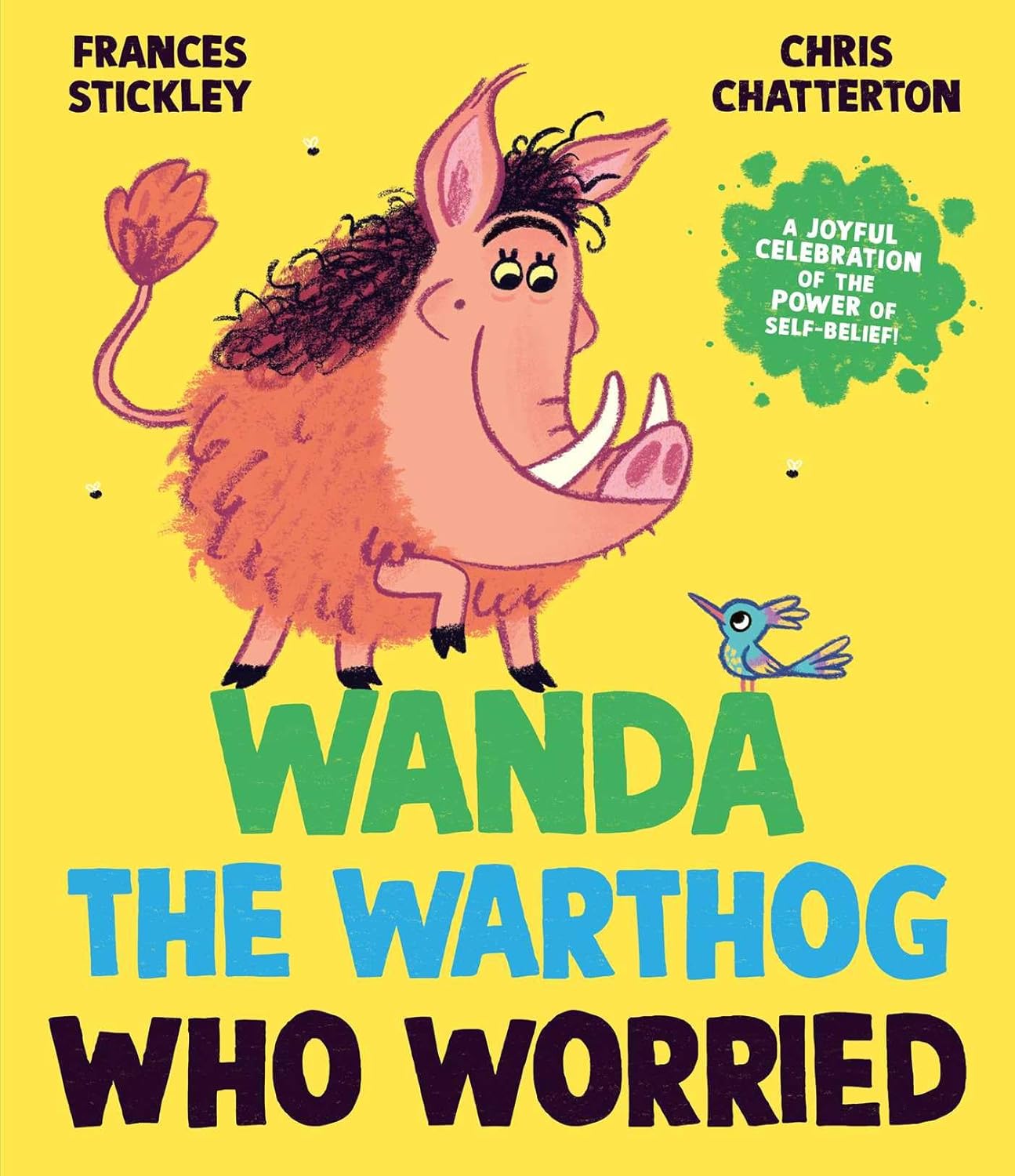
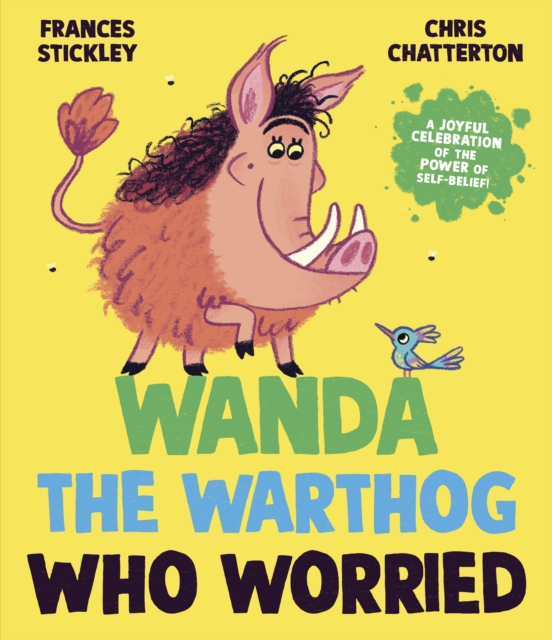
Almost as soon as Wanda the Warthog popped into my head, I knew that she was special. And what’s more; she knew that she was special too. From a really young age, children are surrounded by messages that they are either too much or not enough. Whilst the looming dangers of Instagram and social media seem way, way off for the average picture-book reader, the truth is those messages are everywhere. You only need to look at the slogans on children’s clothing to realise that the world is pushing preconceived ideas about who and what children should be at a very young age. Boys are ‘Born to Lead’ or ‘Be adventurous!” Girls are encouraged to ‘Smile’ and ‘Be Kind.” And so it begins.
Enter Wanda, unapologetically taking up space and making herself heard. We need to see characters like this taking pride in who they are. So many narratives like this one end with some kind of concession to change. It was really important to me that, not only will Wanda never bend or break to that will, but also that she should never have to educate anyone else as to why she deserves to be herself. There is so often a ‘but’ isn’t there? Yes, she’s a big woman but she’s very funny. Or, No, she doesn’t look much but she’s so clever. I wanted Wanda to be the woman without the but, so to speak.
I first realised just how important this issue was when my daughter started comparing herself to others. This once full-of-moxy child was suddenly criticising every part of her body conceivable, even her elbows weren’t safe from scrutiny. It seemed almost instant. And this was a child without any social media at all. So how on earth were other preteens faring when facing down an algorithm determined to show them everything they weren’t; everything they think they ought to be?
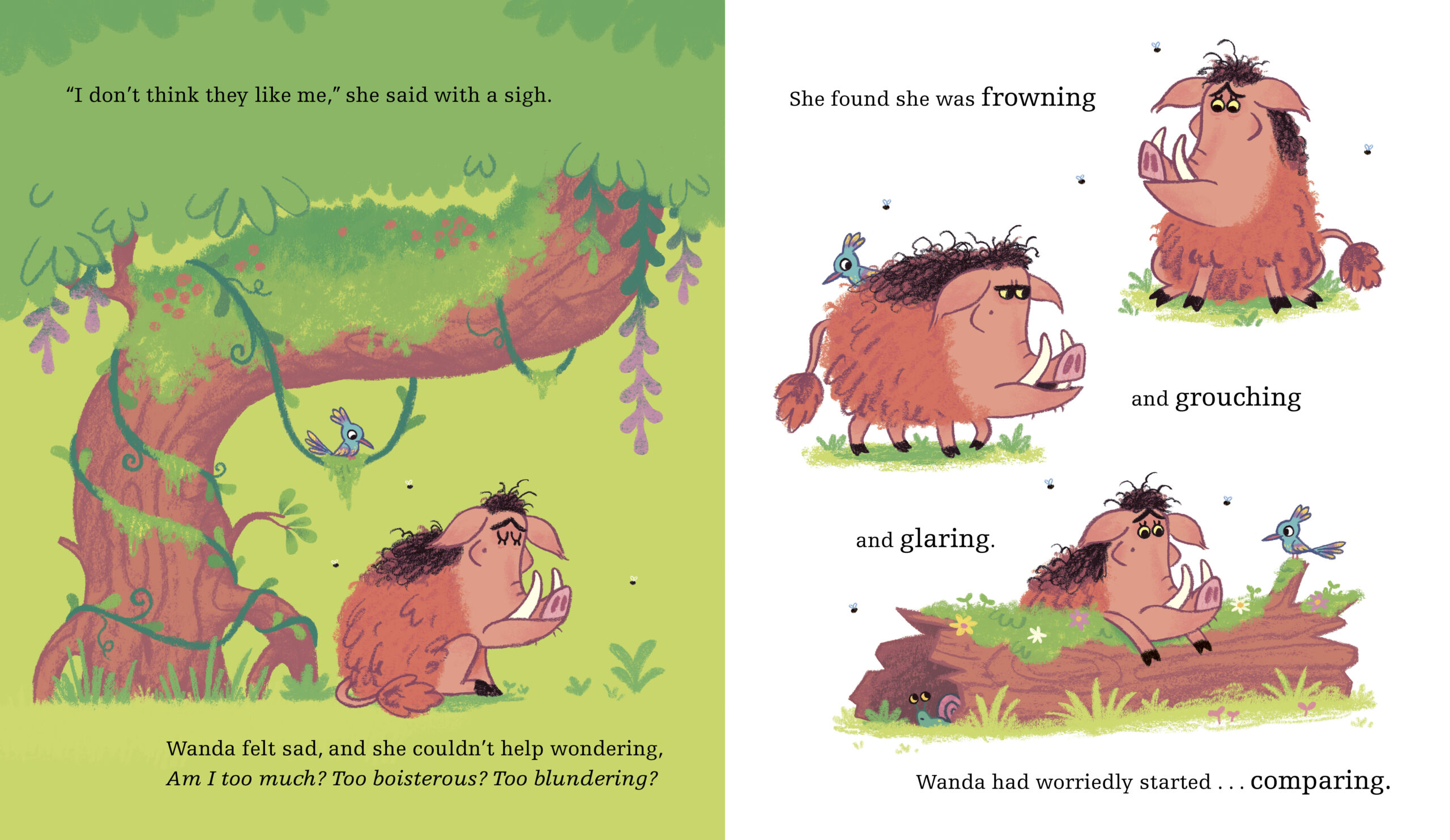
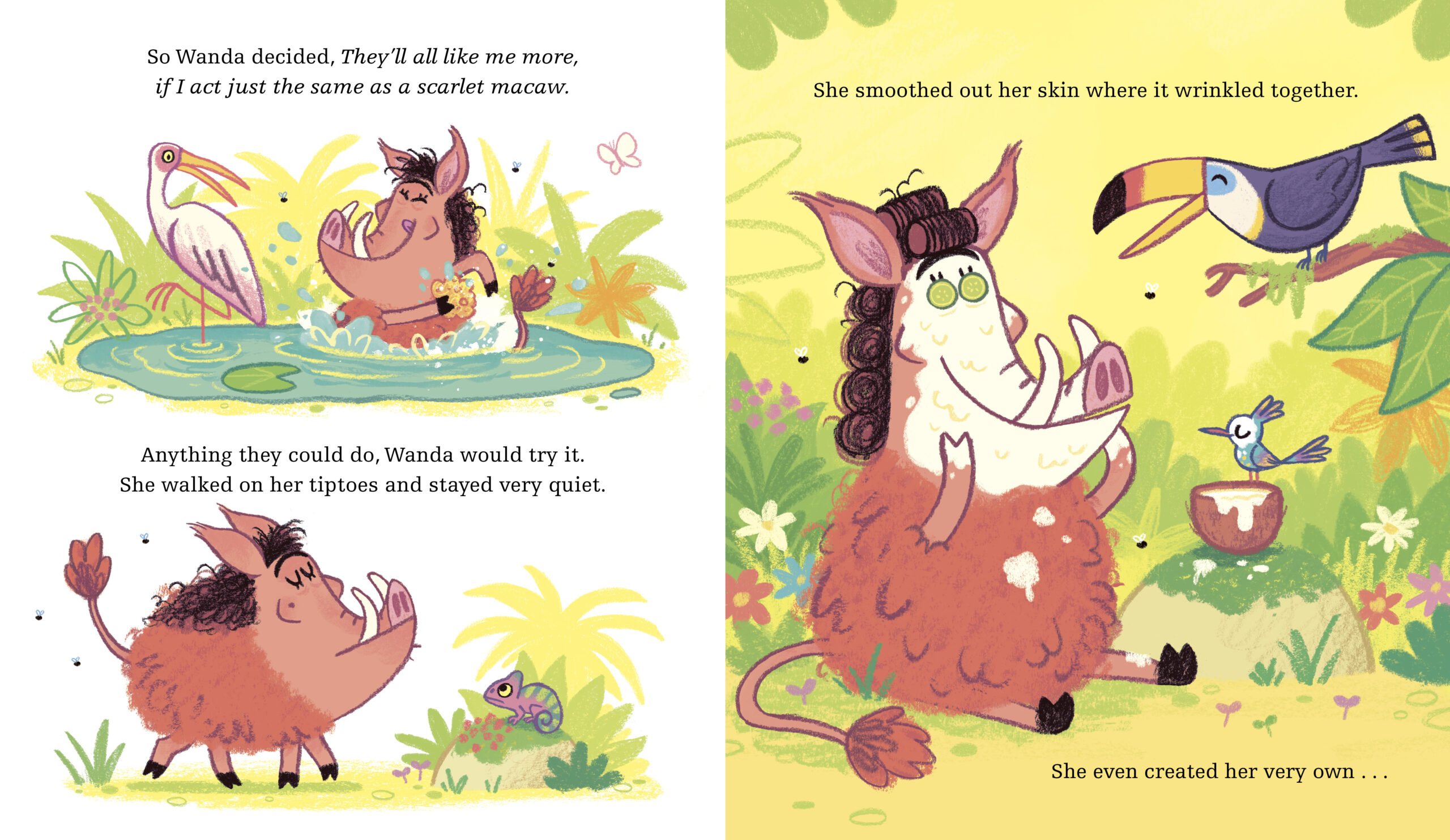
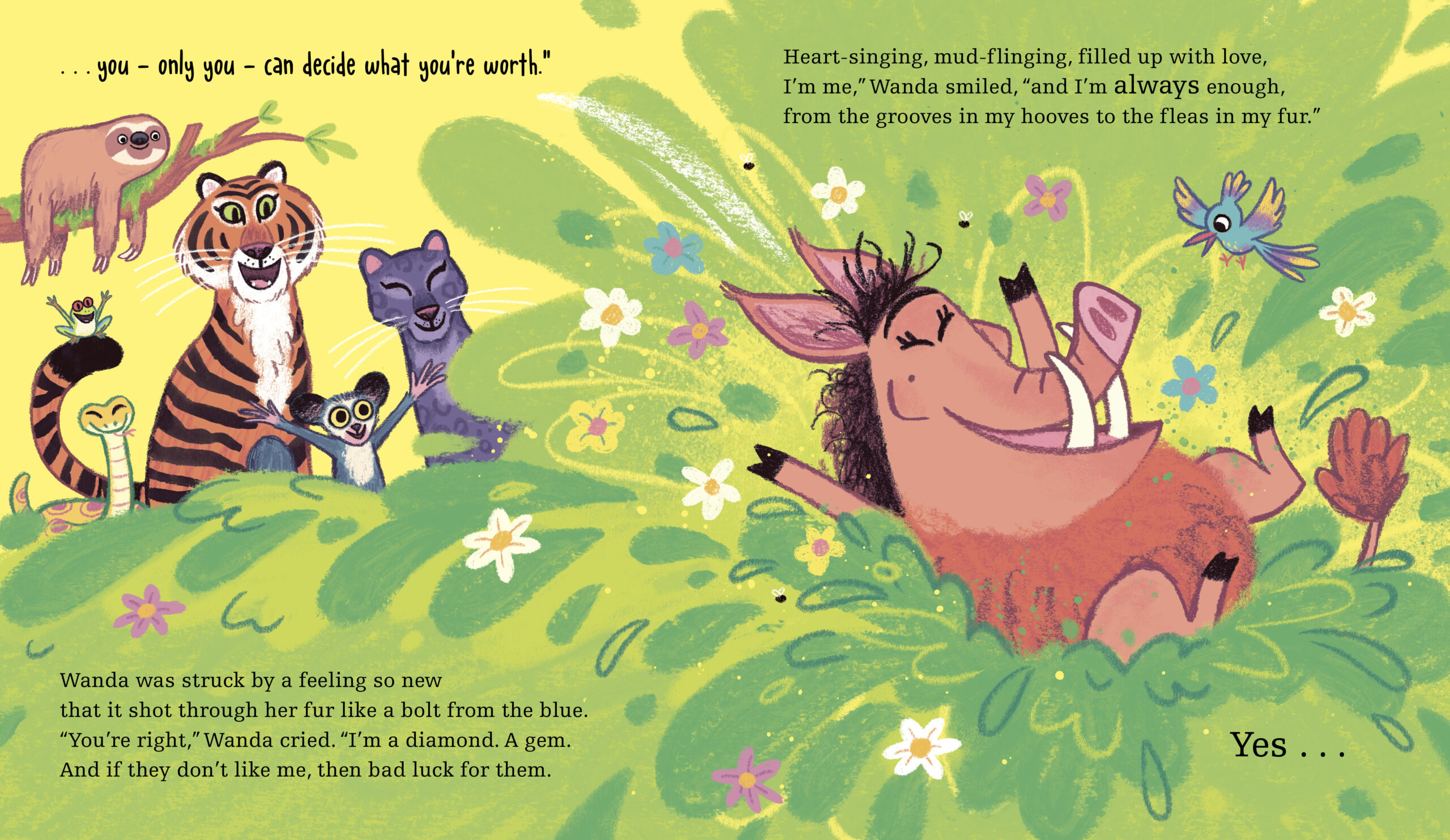
Of course, there is no Instagram in the jungle (yet) so in Wanda’s case, this crisis of self-confidence is triggered by a ploom of scarlet macaws blooming through the sky. They are undeniably beautiful, and yet, so very different to who she is; the opposite, really. If they’re so beautiful, Wanda deduces, that must mean that I’m not. And so begins Wanda’s struggle to become somebody she is not. She wears feathers in her fur, undertakes facials, spa baths and even creates her very own rainbow tail. But nothing makes her feel any better, until of course, she finds relief in shaking off her feathers and reverting back to her old self, warts and all.
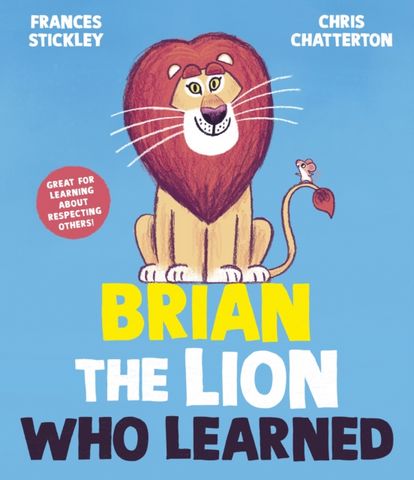
As the follow up to ‘Brian the Lion who Learned’ – a lion of inherited, unexamined privilege who learns how to listen – Wanda the Warthog who Worried aims to be an antithesis to the inherent contractions of all this media messaging. I really hope that she is.
Beauty comes in all colours, all shapes and all sizes. And yet, despite diversifying attempts by the media, the message that still comes across is that to be beautiful in a different way is somehow niche. Luckily, very young children don’t make this distinction and truly do see beauty everywhere. So Wanda’s task really was simple for me, in the end. They were on her side from the beginning. She is, of course, beautiful and always was in their eyes. And this is why writing for children is so wonderful.