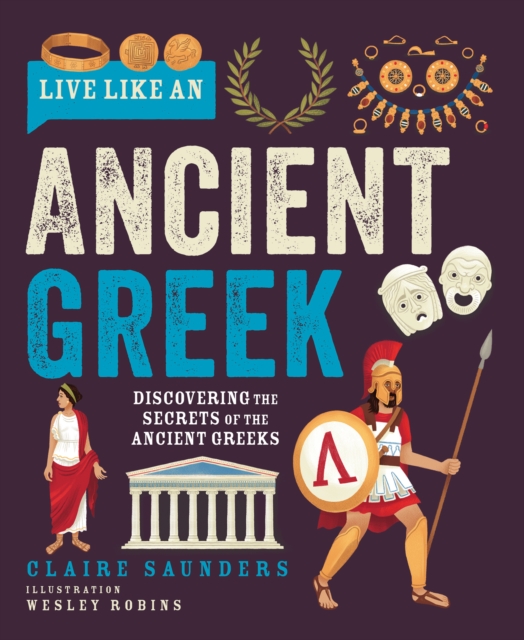
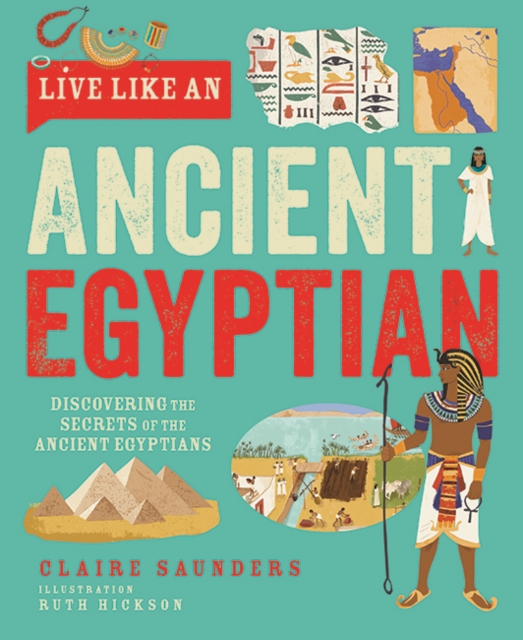

Great Non-Fiction for Ancient Greek Topic Learning!

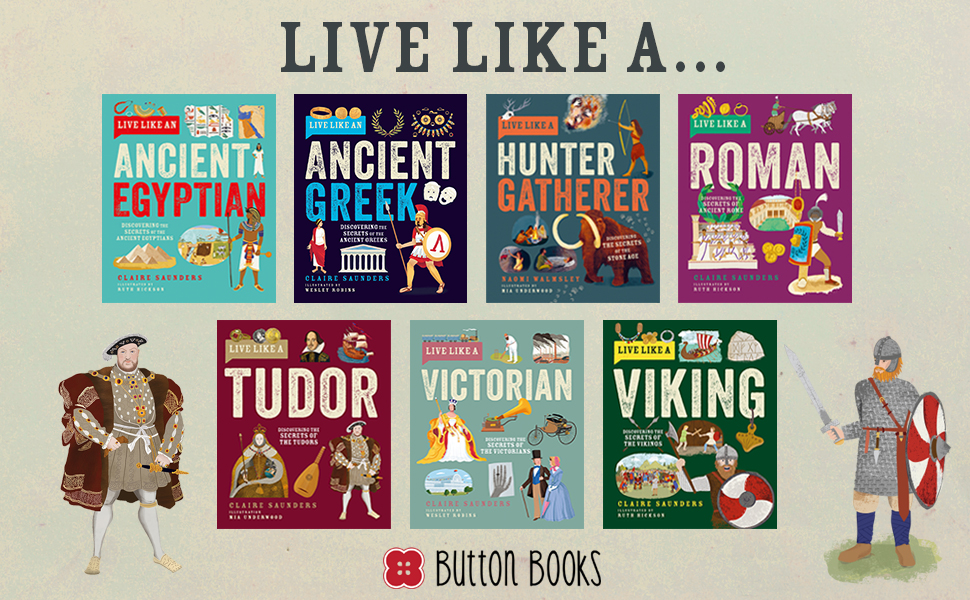
The Live Like a… series from Button Books features fact filled books about popular curriculum topics.

Live Like A…series_UPDATED

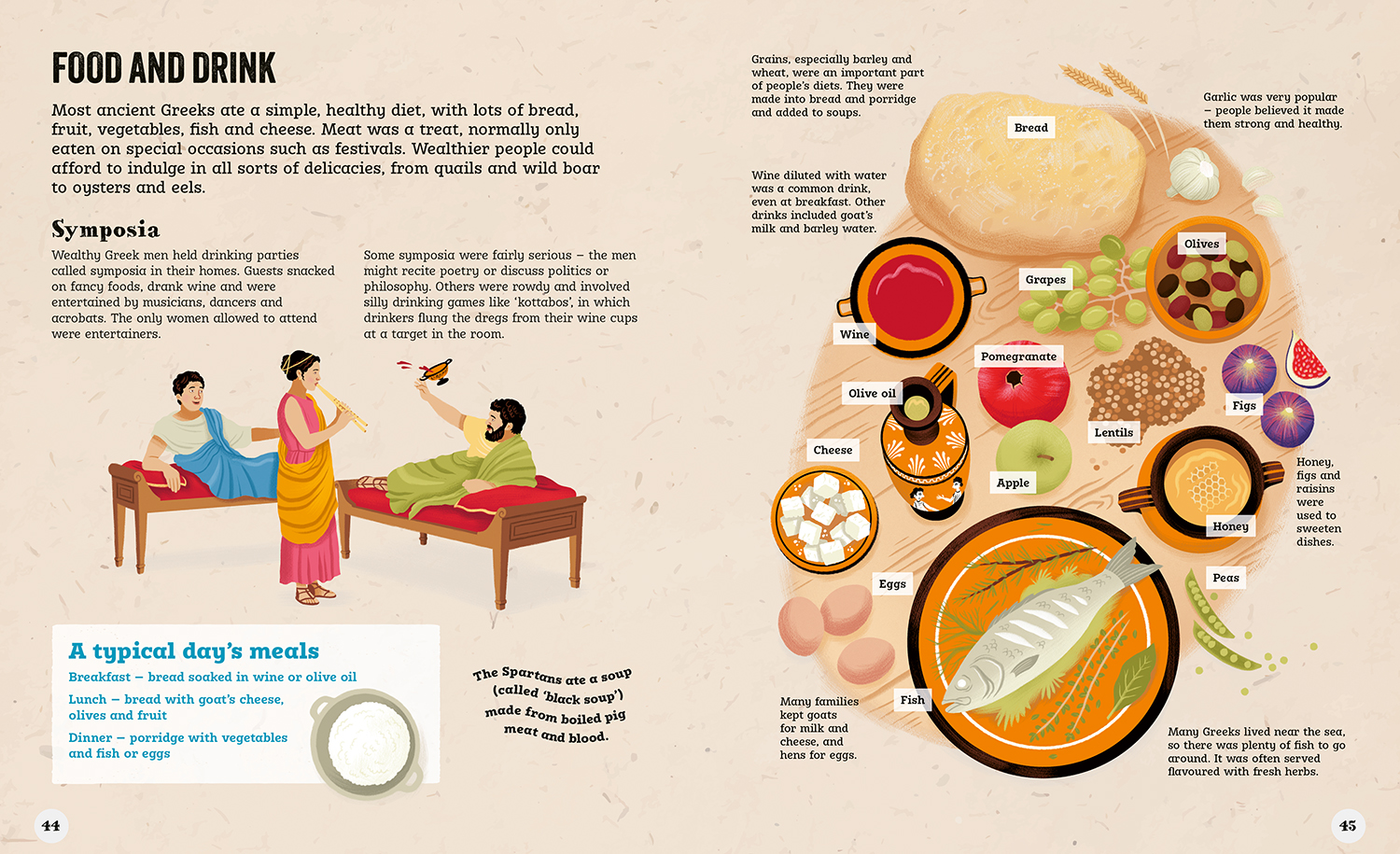
Illustrated throughout and full of clearly laid out, fascinating and engaging information these titles are a great addition to topic boxes and will prove to be a regular choice for reading for pleasure too.  The newest title Live Like an Ancient Greek could find a home in any KS2 classroom!

Update your topic boxes with the Ancient Greeks and 6 other popular topics now for just £54!

ISBN: live_like_bundle
Original price was: £90.93.Current price is: £54.00.
Available

ISBN: 9781787081895
Original price was: £12.99.Current price is: £9.74.
Not Yet Published

ISBN: 9781787081826
Original price was: £12.99.Current price is: £9.74.
Available

ISBN: 9781787081772
Original price was: £12.99.Current price is: £9.74.
Available

ISBN: 9781787081543
Original price was: £12.99.Current price is: £9.74.
Available

ISBN: 9781787081376
Original price was: £12.99.Current price is: £9.74.
Available

ISBN: 9781787081260
Original price was: £12.99.Current price is: £9.74.
Available

ISBN: 9781787081208
Original price was: £12.99.Current price is: £9.74.
Available
Claire Saunders photo

Meet the author!

Claire Saunders is the author of Live Like an Ancient Greek as well as several others in this fantastic series.  She has very kindly answered some questions for us about the new edition to this series…

The Ancient Greeks who inspire your most recent title in the series stretch across such a broad range of industry, invention, exploration and more – how on Earth did you decide what to include and how does it get brought together?

That’s a good question! The focus of the books in this series is the everyday life of ordinary people, so that helps me narrow down which topics to include. The books always include a general introduction, a timeline with key historical dates and a map, but most of the content is about what life was like – what did people eat, how did they dress, what did they believe, what happened when they got sick, what did they do for fun, what was school like, what did houses and cities look like, and so on.

Of course, in Ancient Greece life varied a lot from one city-state to another (compare cultured, democratic Athens to warlike Sparta, for instance), and was also very different for rich and poor people, free people and slaves, and men and women. A wealthy girl growing up in Athens would have a very different (and much more restricted) life than a girl growing up in Sparta, for instance. It’s obviously not possible to cover what life was like for everyone, but hopefully the book gives a flavour of what it was like to be an Ancient Greek.


Along the same lines, is there something you learned doing your research that was super fascinating but didn’t make it into the book?

Curse tablets! These were thin sheets of metal that people inscribed with magical messages, asking the gods or supernatural powers to harm or influence other people. The Ancient Greeks used curse tablets for all sorts of requests – ruining a competitor’s business, winning a court case, beating someone in a chariot race or getting rid of a romantic rival.


You’ve worked with illustrator Wesley Robins on both Ancient Greek and Victorian from this series.  Which spread (if you can choose) is your favourite and why?

It’s hard to choose! I love Wesley’s artwork, especially the way he makes people’s faces and gestures so expressive, so they seem like real people. If I had to choose a favourite spread from the Ancient Greece book, it would have probably have to be the bustling agora scene on the ‘City Life’ spread, but I also have to commend Wesley for the artwork on the ‘At the Olympic Games’ spread – illustrating a story about a race involving 20 naked men was not the easiest brief for a children’s book, but he made it work brilliantly!
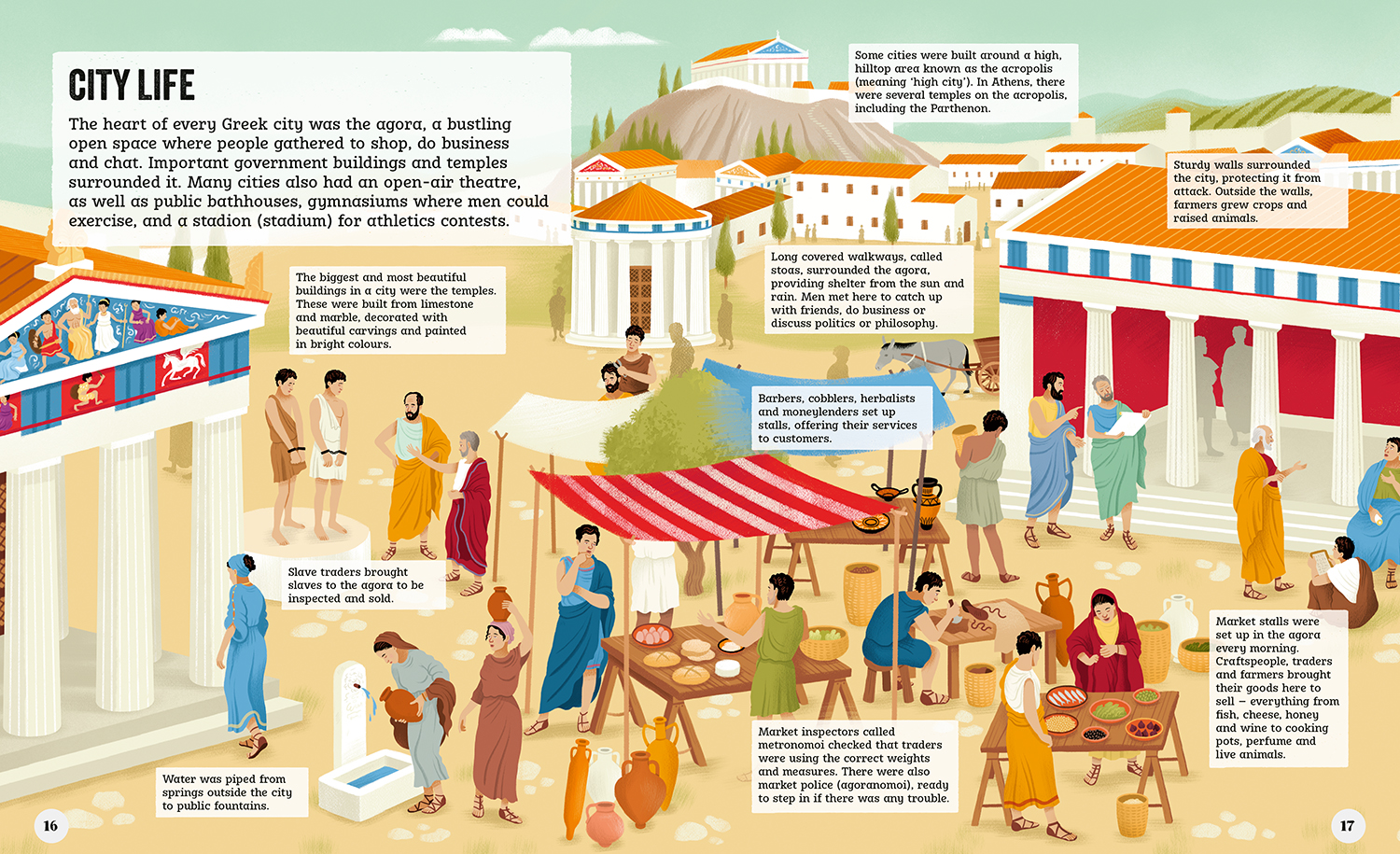
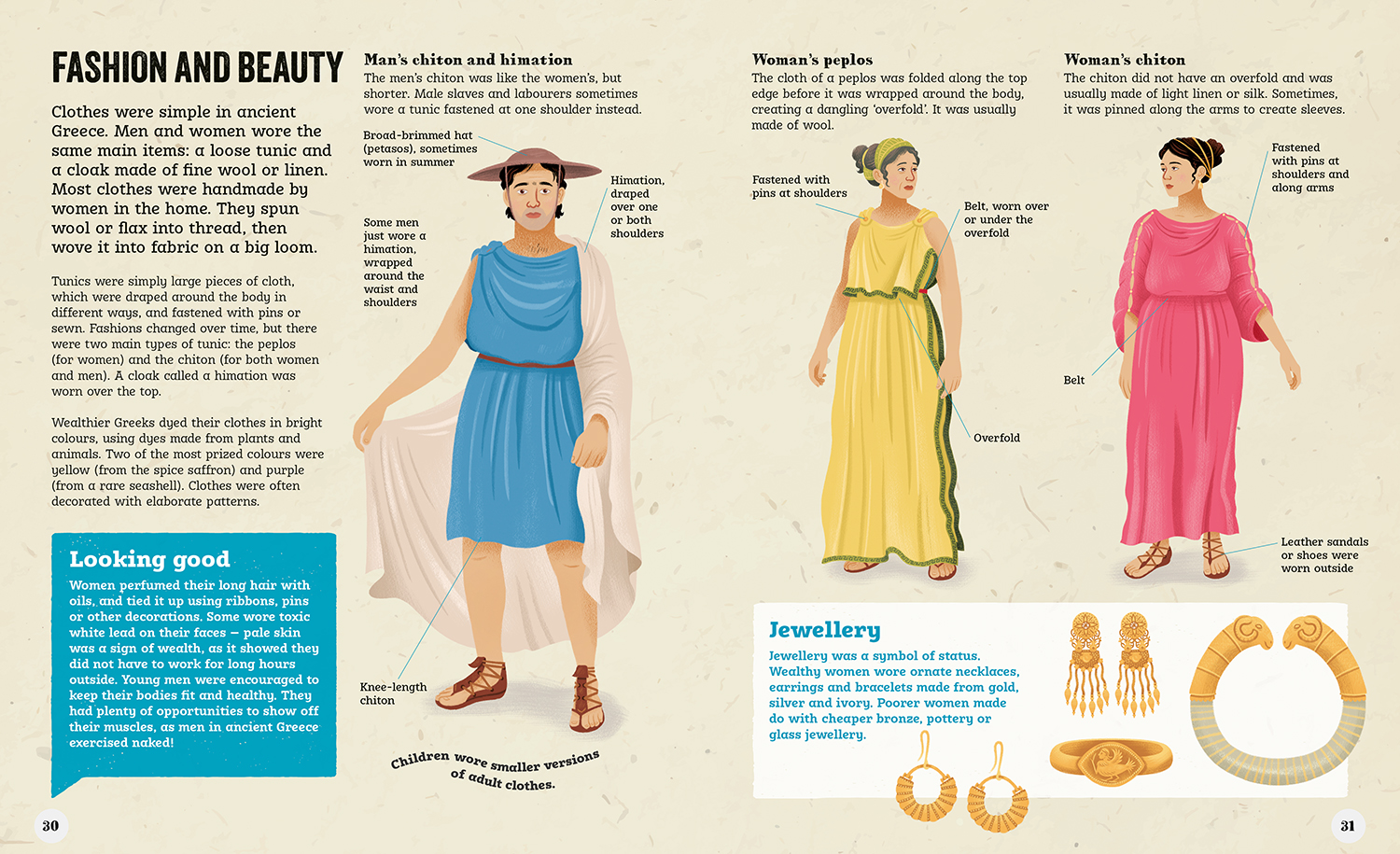
Let’s Look Inside…

You’ve travelled through several thousand years over the course of this series, why do you think historical non-fiction is so important for classrooms and what’s the most difficult part about creating it?

It helps children discover what life was like for people who lived a long time ago, but also to understand how the world became what it is today. So many ideas and inventions from Ancient Greece have influenced the Western world – architecture, democracy, philosophy, the Olympic Games, theatre . . . The ‘Could you live like an Ancient Greek’ questions at the back of the book invite children to think about some of these ideas – for example, do they think the Athenian democracy worked well and was fair, and how does it compare to today’s system?

I do think it can be difficult bringing history to life for children. Focusing on everyday life is a good way to make it feel more accessible and less like a list of dates. One of the things I really like about the ‘Live Like A . . . ’ series are the stories it includes about the life and experiences of a fictional child character living at the time; for example, in the Ancient Greece book, children can follow Pentathlos, a Greek boy living in Athens, as he goes to school, plays with his brother at home, watches a race at the Olympic Games and is told a Greek myth by his grandfather. These stories hopefully make it a bit easier to imagine what life was like.


Do you recall studying history at primary or secondary school?  What topics did you enjoy most and least when learning about them then?

I didn’t actually enjoy history that much at primary or secondary school – my main memories are of dry facts about corn and peasants! Though I do remember enjoying the Tudors (and it was great to revisit that period of history in the Live Like a Tudor book). It was only really at A-level that I started to love history – I had a brilliant teacher who used to make up songs about the Thirty Years War or the Russian Revolution and sing them to us on his guitar. He was a legend!


Finally, what’s the best bit, the worst bit and a random rest (no positive or negative just interesting) bit about writing historical non-fiction for children?

The best bit(s): It’s so much fun reading and learning about different periods of history. I also love writing these books because they’re so varied – most of the spreads are factual, but there are also a few stories and some craft projects. Over the years, I’ve made Roman wax tablets, Viking drinking horns (my favourite!), Tudor ruffs, Victorian paper flowers, Egyptian amulets, and tried out a lot of recipes too – some of which have been surprisingly tasty!

The worst bit: When I finish writing the books I’m always desperate to visit the places I’ve been writing about, but rarely have the time. Having said that, I do have a trip to Athens planned!