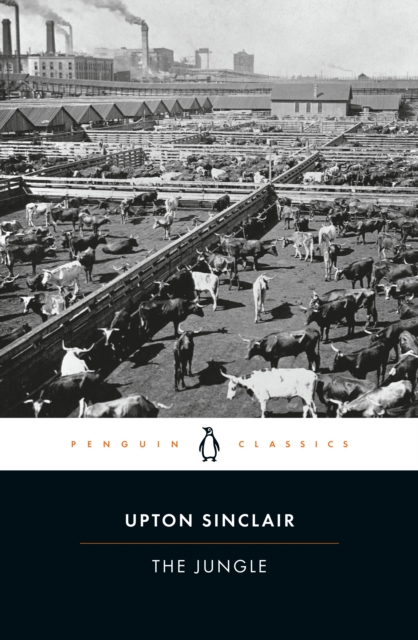
One of the most powerful, provocative and enduring novels ever published to expose social injustice in the United States, with an introduction by Ronald Gottesman in Penguin Classics. Upton Sinclair’s dramatic, deeply moving story laid bare the brutal conditions in Chicago’s stockyards at the turn of the nineteenth century, throwing into sharp moral focus the overwhelming odds stacked against immigrants and working people struggling for their share of the American Dream. Condemned by the conservative press as an un-American libel on the meatpacking industry, and attacked for Sinclair’s frank promotion of Socialism and unionisation as answers to worker exploitation, the book was embraced by more progressive voices — including then President Theodore Roosevelt — and served as a major catalyst for the passing of the Pure Food and Meat Inspection Act, whose effects are still felt today. Upton Sinclair (1878-1968) was born into an impoverished Baltimore family, the son of an alcoholic liquor salesman. At fifteen he began writing dime novels to fund his education at the City College of New York, before going on to graduate work at Columbia. Among his subsequent novels, his breakthrough was The Jungle (1906), a scathing exposé of Chicago’s meatpacking industry. After a period in politics, Sinclair returned to fiction, winning the Pulitzer Prize for his account of the Nazi takeover of Germany in Dragon’s Teeth (1942). If you enjoyed The Jungle, you might like Saul Bellow’s The Adventures of Augie March, also available in Penguin Classics.
ISBN 13: 9780140390315
Author: Upton Sinclair