Blog Banner that reads Q and A with Danielle Brown MBE

:

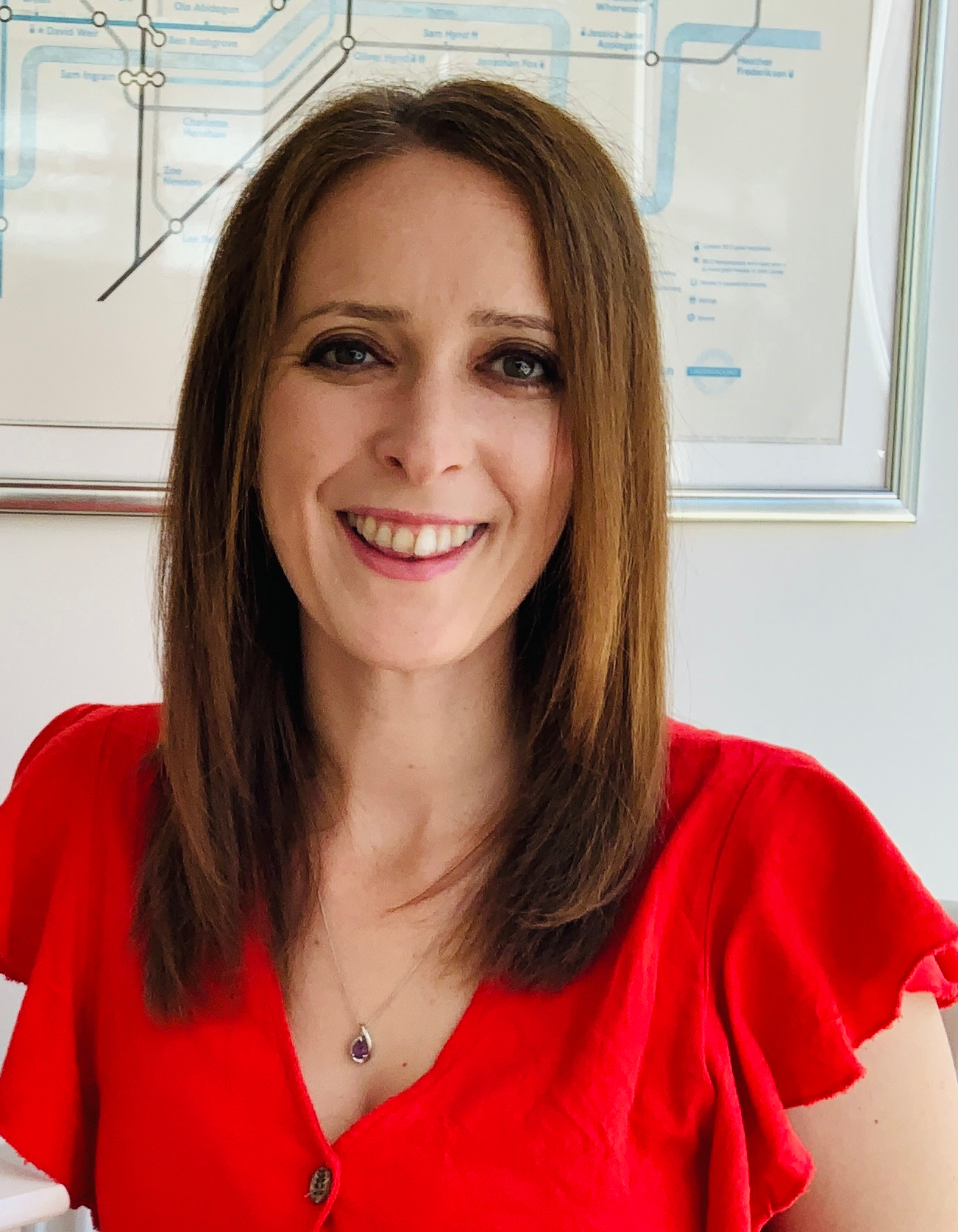
Danielle Brown MBE is a Commonwealth & Paralympic champion sportswoman.  Her non-fiction book Run Like a Girl takes the phrase ‘like a girl’ and flips it on its head as she shares the stories and successes of 50 elite sportswomen – some you’ll know and others you may not!

If you are looking for non-fiction to suit Key Stage 2 or 3, these women’s stories are an exhilarating read.

Danielle kindly answered some questions for us about being an athlete, disability, the opportunities of sport and her book …

We love an opportunity to celebrate women in sport, please can you share a little about your sporting success.

I started archery at the age of fifteen. I was terrible to begin with, but after a lot of practice I made the Great Britain team three years later, jumping straight in as World Number One. I won two Paralympic gold medals (Beijing 2008 and London 2012), five world championship titles, and I became the first disabled athlete to represent England in an able-bodied discipline at the 2010 Commonwealth Games where I won a gold medal in the team event.
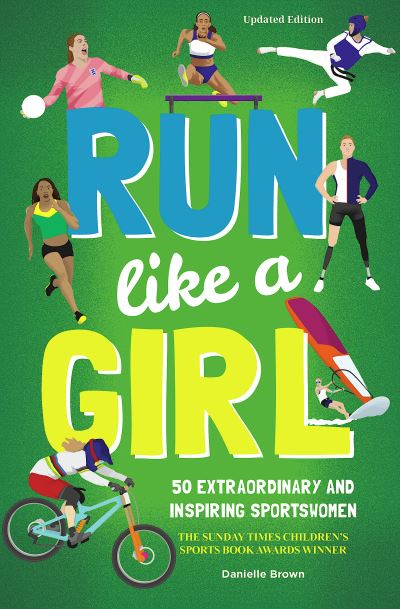
The title is a nod to what might be considered a less than positive descriptor – why did you choose it?

That’s exactly why I chose it. Running, catching or throwing like a girl has historically been positioned as a put down and when we change the narrative we find that beliefs and behaviours can also change. So many girls and women enjoy sport and do brilliantly well at it, and the best way for them to engage with sport is exactly as they are. I wanted to change the way we see girls in sport: they can run like a girl, score like a girl and win like a girl and when we do this more opportunities become available.

How did your book come about, had you always planned/hoped to write one and why did you want to highlight women in sport?

I always loved taking part in sport, but growing up I never thought I would have a career in it. I had some huge aspirations, but being an athlete was never one of them. Because I didn’t see female athletes on the TV, in books, or talked about them at school I didn’t even realise this was a possibility and I was very fortunate to find a sport that I loved and turned out to be very good at. There are so many incredible athletes out there doing amazing things, but they still don’t get the recognition they deserve and role models aren’t as accessible to young people. These role models have the power to inspire young people, particularly girls, to think “if she did it, I can too” and help them understand that there is a place for them in sport.

How did you narrow down who to include in the book?

Choosing only fifty athletes was super tough! I wanted to show young people that there are so many different sports out there, from Olympic sports, adventure sports, team sports, and lesser known ones like jousting and open water swimming. I wanted to highlight that there are so many different ways you can engage in sport too – you can play it, coach it, referee it, use it to make a difference to the environment, bring peace and give back to charities. I wanted to point out that you can be a mother and have a career and still be a top athlete, and that there isn’t a single ‘right’ pathway to get into sport and make it to the top. As an athlete I got to travel the world, so taking people to different countries and explore different cultures was also really important.

What are a some of things about the women in your book that you learned while researching that really made your jaw drop?

Some athletes included in Run Like A Girl are big names, but what was surprising were the number of athletes that I had only heard of in passing (or sadly, not at all) and their achievements are simply astounding. Some of my favourite facts are:

  • Novelene Williams-Mills from Jamaica winning a silver medal in London 2012 after just getting a cancer diagnosis – and went on to medal again in Rio 2016
  • Maria Toorpakai Wazir, the squash player from Pakistan who defied the Taliban to keep playing sport. Before taking up squash, she disguised herself as a boy to compete in weightlifting and won a silver medal at the state championships
  • British Paralympian Karen Darke is simply awe-inspiring. Not only has she won a silver medal in London 2012, she has climbed El Capitan, medalled in paratriathlon, crossed the ice cap in Greenland, kayaked from Canada to Alaska – and has a PhD in geology.

Was writing a book how you thought it would be?

I loved every second of it. I was so inspired learning about the amazing athletes, the choices they made, the barriers they broke through, and their unending belief in themselves and their goals. Finding the facts and turning them into stories was so much fun. I’ve always wanted to write books – this was my ambition long before sport took over – and connecting it with my passion for women’s sport made the process a lot more exciting than I realised.

Are there any similarities between writing a book and competing in top level sport?

Sport taught me so many skills and I have copied and pasted the mindset I used as an athlete in my life outside of sport. The commitment to achieve a big goal, motivation to keep going, and confidence to put words on paper all really helped. Getting to hold a copy of the book for the first time and seeing all my hard work come to life honestly felt as rewarding as winning a medal.

What do you hope readers of this book take from it?

People often talk about losing themselves in a good story, but I think it’s just as important to find yourself. I’d love readers to be able to identify with the different stories, not necessarily because of a sport they play, but because they resonate with the athletes’ journeys. It teaches important life skills like confidence and resilience, but instead of saying “this is the way you should do it” it shows how different athletes have tackled tricky situations. Most of all, I want readers to know that there is a place for everybody in sport, including them.

As a Disabled sportswoman, what do you hope to see in the future in terms of representation and recognition for women and for Disabled women in particular?

It was really important for me that disability was well represented in Run Like A Girl. It was hard to find female athlete role models growing up, and disabled ones from any career sector were even fewer and further between. The underrepresentation and misrepresentation of disability that still goes on is quite scary, but showcasing ability and educating about disability changes our perceptions of it. I think sport is a brilliant platform to do this. Focusing on what a person can do rather than what they can’t filters down into so many other places in society. We still have a long way to go and I hope to see more disabled women get the recognition they deserve.

Do you still enjoy sport? Which ones? And which ones might you like to try?

Being outside is one of my favourite things and even though I’m no longer competitive in archery I love to try new things. I enjoy swimming and paddleboarding, and I’d like to start kayaking. Writing about the adventure sports in Run Like A Girl was super inspiring and I want to show how accessible these can be.

Where do you keep your gold medals?

In my bag! I’m always taking them to school visits and other events. Getting to share them with others is one of my favourite things.

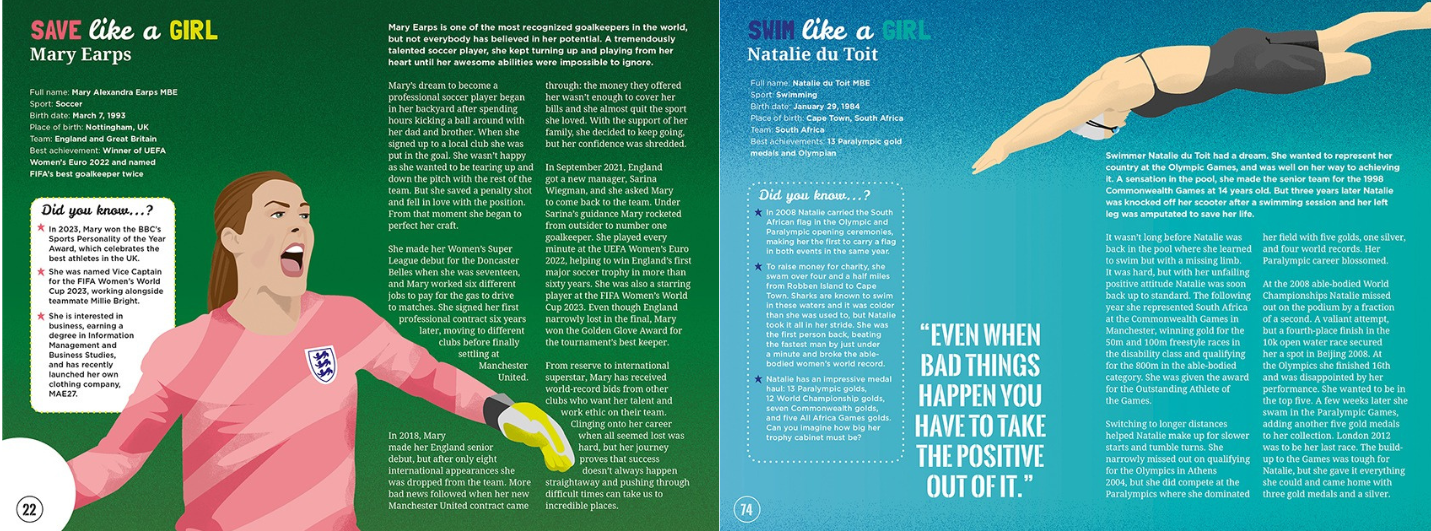
Take a sneak peak inside …


This year’s theme for Non Fiction November is Why Don’t You and we think Run Like a Girl is fits this perfectly!

Why don’t you find out about these 50 women who compete is a huge array of sports – perhaps you’ll be inspired to give something a try.

You can read a little bit about Run Like a Girl by clicking the image below.

We’d like to thank Danielle for taking the time to answer our questions.

Tanglewood 3 scaled

From the Drawing Board: Gillian McClure

Sneak Peek feature Beautiful e1765979343946

Library Sneak Peek: The Really Beautiful Thing by Frances Tosdevin & Ali Pye

Spotlight How We Used to Live feature

Introducing: How We Used to Live

Poetry by Heart Globe

Our Experience: Poetry by Heart