:

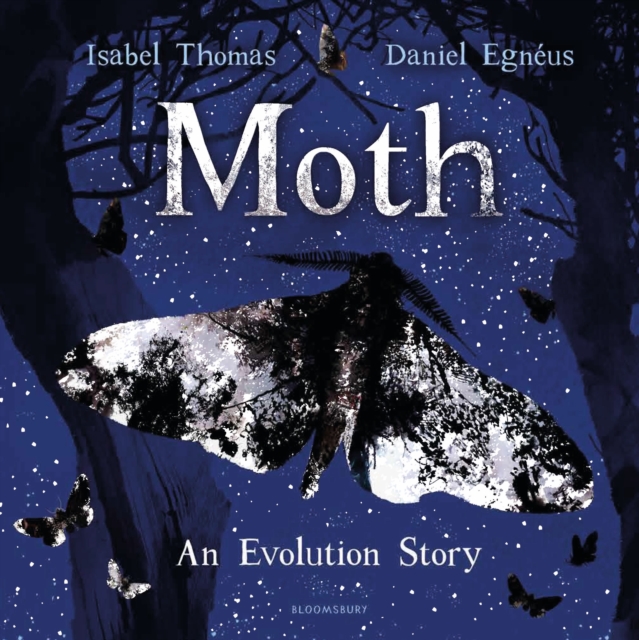
Isabel Thomas and illustrator Daniel Egnéus have added a frog to their moth and their fox!

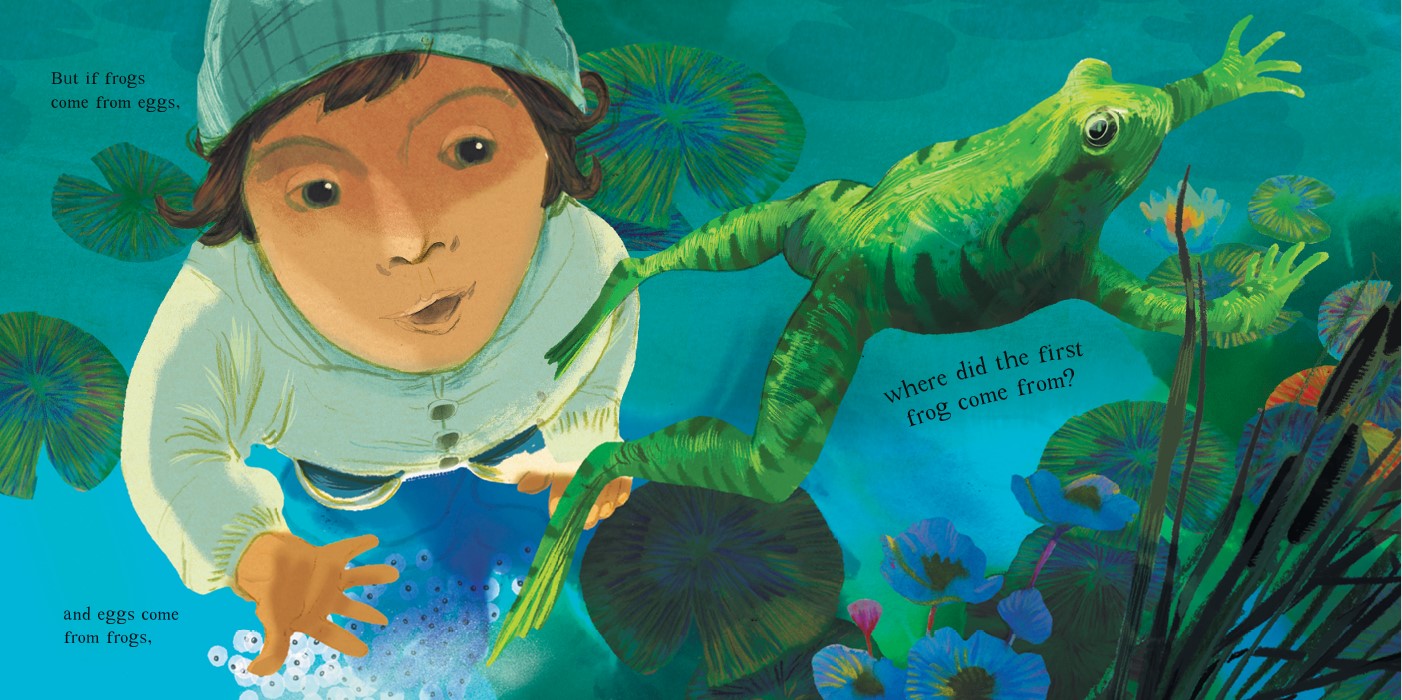
In Frog they tackle the somewhat large concept of … all life on Earth!  Isabel has very kindly answered some questions for us about turning the life of the universe into a 40 page title for children and many thanks to Bloomsbury who have shared some of Daniel’s beautiful spreads…

~
Could you tell us about the research that goes into a book like Frog? How did you decide what to include – did anything really fun get cut as there just wasn’t space for it?

I set myself a big challenge with Frog – to condense the history of the universe and life into 40 pages! I’ve been lucky enough to write chunky reference books on the tree of life and the universe over the last few years, so I had amassed a vast amount of research and knowledge.

I began by revisiting that research and plotting the key ‘beats’ I wanted to include. Alongside that, I began jotting down more lyrical words and phrases that I might include. Then I began to weave it all together. My first drafts were much, much longer than the finished text. The hardest but most satisfying part is whittling the story down without losing any meaning or flow. Once the story starts to take its final shape, I don’t miss any of the text that I’ve cut!

What is it about writing science subjects that you enjoy?

I always say to children that science is not a set of topics, but a way of exploring the universe. This means science can be about absolutely anything – there are no limits at all. You can write a scientific book about unicorns if you want (and I have!). I just love the process of starting with zero or very little knowledge and following my curiosity to find about new things, to become expert in a whole new area. It’s that feeling of wonder and adventure that comes with exploration, plus that brilliant feeling of sharing what you’ve discovered with someone else.

Why do you think non-fiction is such an important element for reading for pleasure?

Humans are insatiably curious, and it’s really powerful when a child starts to see books as a way to answer their questions about life, the universe and everything. It shows them they can take control of their own learning, led purely by their curiosity. We might read non-fiction for wonder, to learn new skills, to spend time with people we won’t come across in real life, to understand nature better, to understand ourselves better, to imagine ourselves in future careers… all these things bring pleasure. Bring all of this together, and the non-fiction library provides children with an atlas of possibilities.

What’s your favourite spread in Frog? Are you involved in how the illustrations evolve?

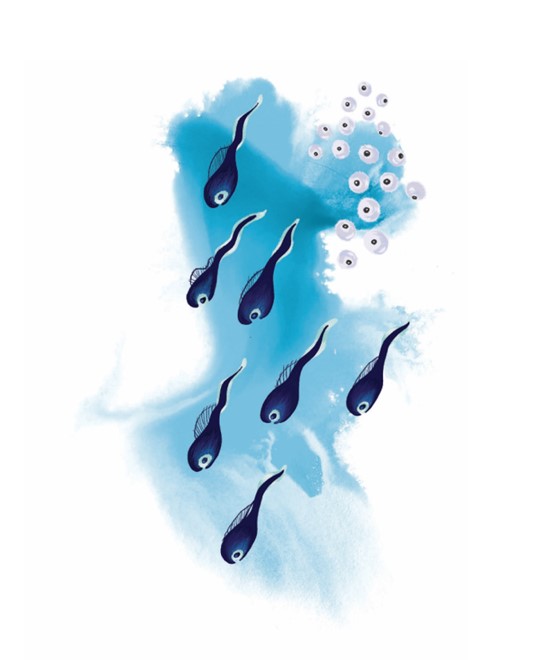
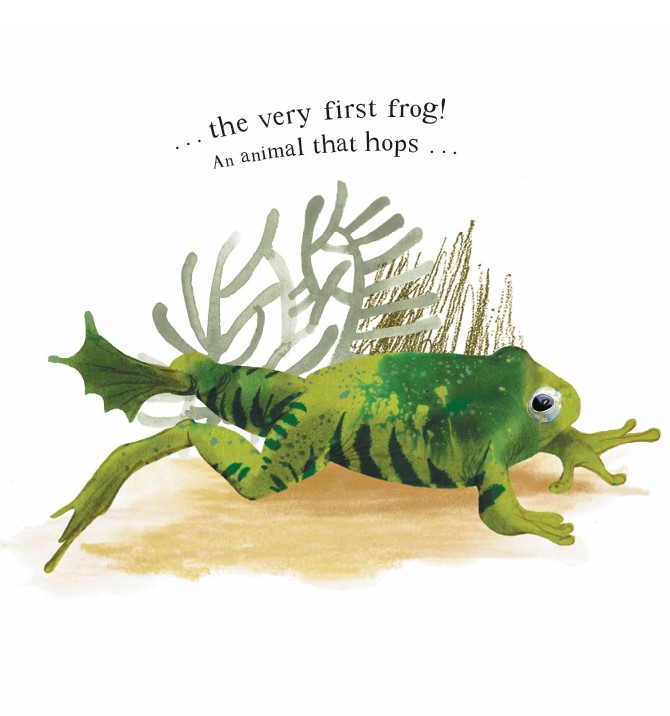
Seeing the early roughs was breathtaking and I feel so lucky to collaborate with Daniel Egnéus. I adore the spreads that capture the energy of the first stars forming, then exploding – he approaches space science in such a clever way, really capturing the wonder and excitement of it all rather than falling back on ‘textbook’ style models. I also love the spreads that explore early life – we don’t know what it looked like, there are no fossils, so Daniel has created a vision of the spectacular wonder of it all.

I typically make some illustration notes and collect some useful references when I write the manuscript e.g. on the main species of frog we’d use in the text and on the accurate tetrapod tree of life midway through. But ultimately collaboration is best when an illustrator and art director have total freedom to bring their own interpretation and vision to the subject, and Frog is a brilliant example of that.

Frog (and Moth and Fox) looks at a pretty complex subject – why tackle something so large? And what’s something you learned that is just ridiculously fascinating or seemingly impossible?

All three books are inspired by the big questions that children ask – How did life begin? How did we get here? Why are there so many different animals? What happens when an animal dies? I chose these topics for Frog, Moth and Fox because they are some of the trickiest to explain! The best time to introduce a child to a subject is not when the curriculum says so, but when they begin to ask questions about it. I believe children can understand anything, at any age, if it’s explained in the right way. Picture books are a fantastic format for doing this, because everything that is familiar about a picture book (the immersive illustrations, the page turns, the shared reading experience) acts as a bridge to the new ideas you are introducing. When we help children to find satisfying answers to their questions, it encourages them to ask more questions and develop a real thirst for learning.

I absolutely have that thirst myself, and I’ve learned that the universe is far stranger than fiction. I love, for example, the fact that all land animals with backbones (including us) are ultimately fish that have adapted to live on land!

~

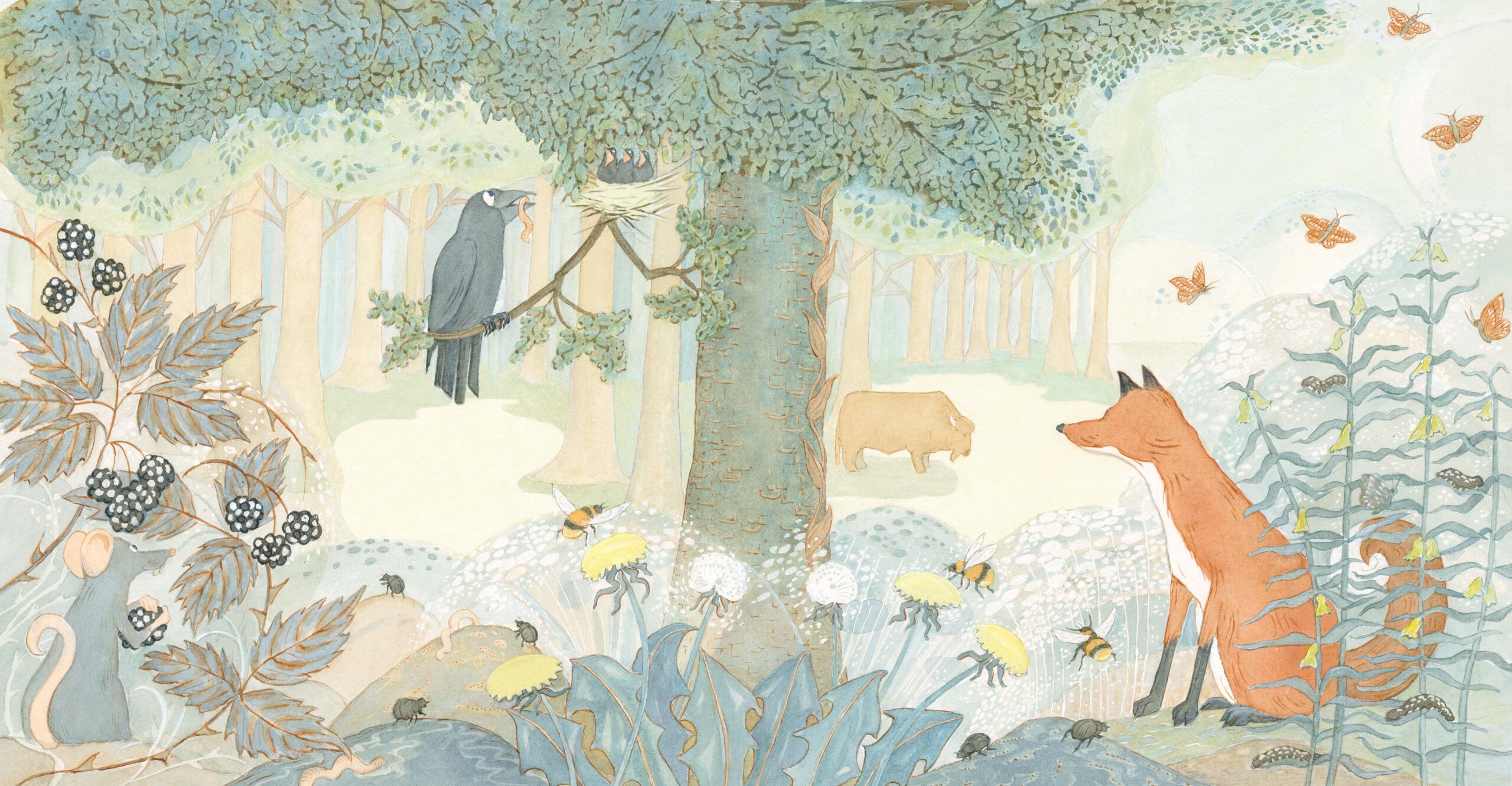
Many thanks to Isabel for answering our questions.  Many thanks also to Daniel Egnéus whose illustrations really bring Isabel’s words to life!  You can find out more about Frog, Fox and Moth or buy a bundle of the three using the links below.

Spotlight How We Used to Live feature

Introducing: How We Used to Live

Poetry by Heart Globe

Our Experience: Poetry by Heart

Author Event Josh Lacey 1 e1764842412373

Author Events: Josh Lacey

Teaching Resource feature Frankenstein 1

Teaching Resource Library: Teaching Frankenstein with Fe Brewer.