Claire:
The first step of putting the books together is to come up with an outline, which plans out what topic will be covered on each of the book’s spreads (a spread is two facing pages).
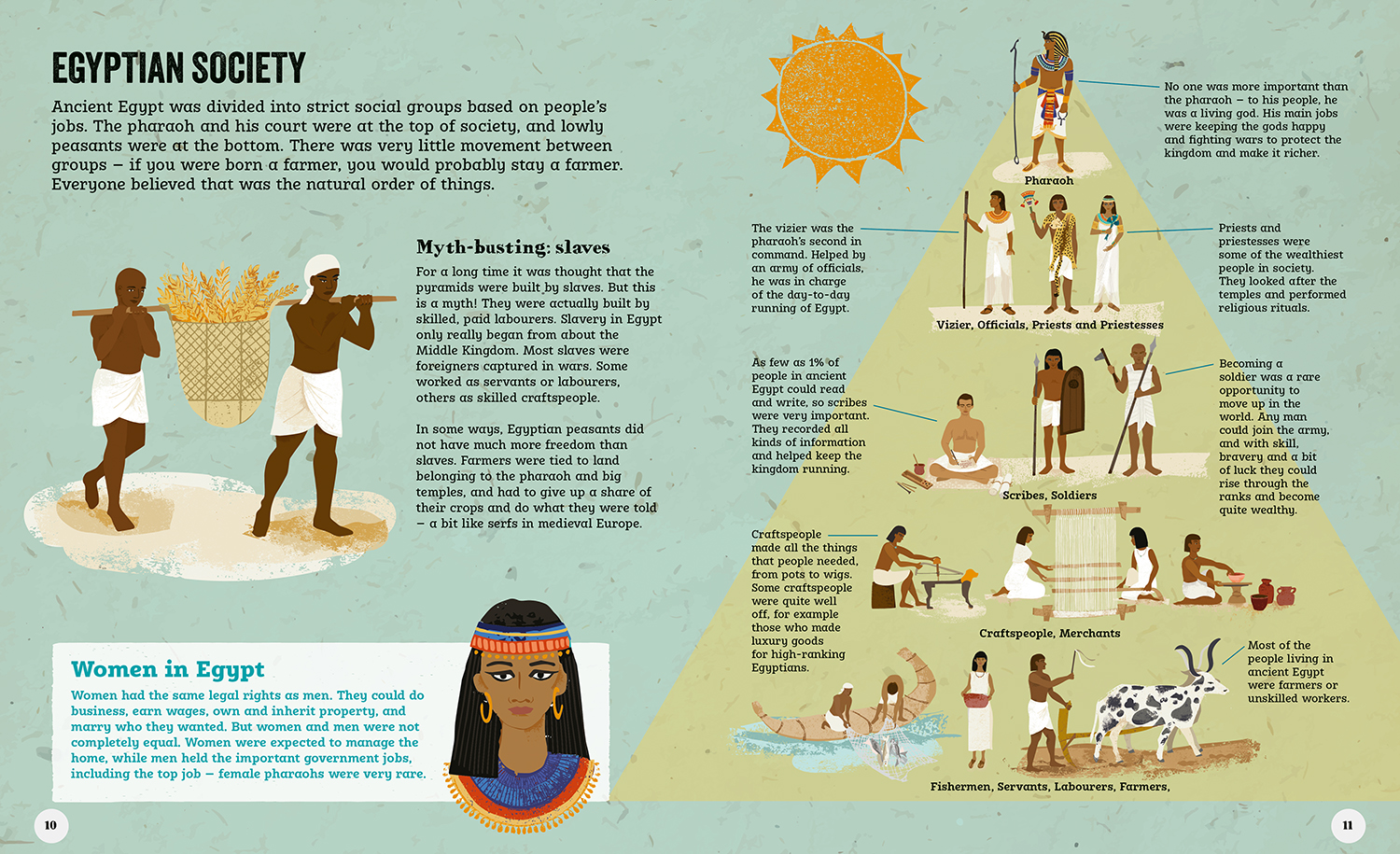
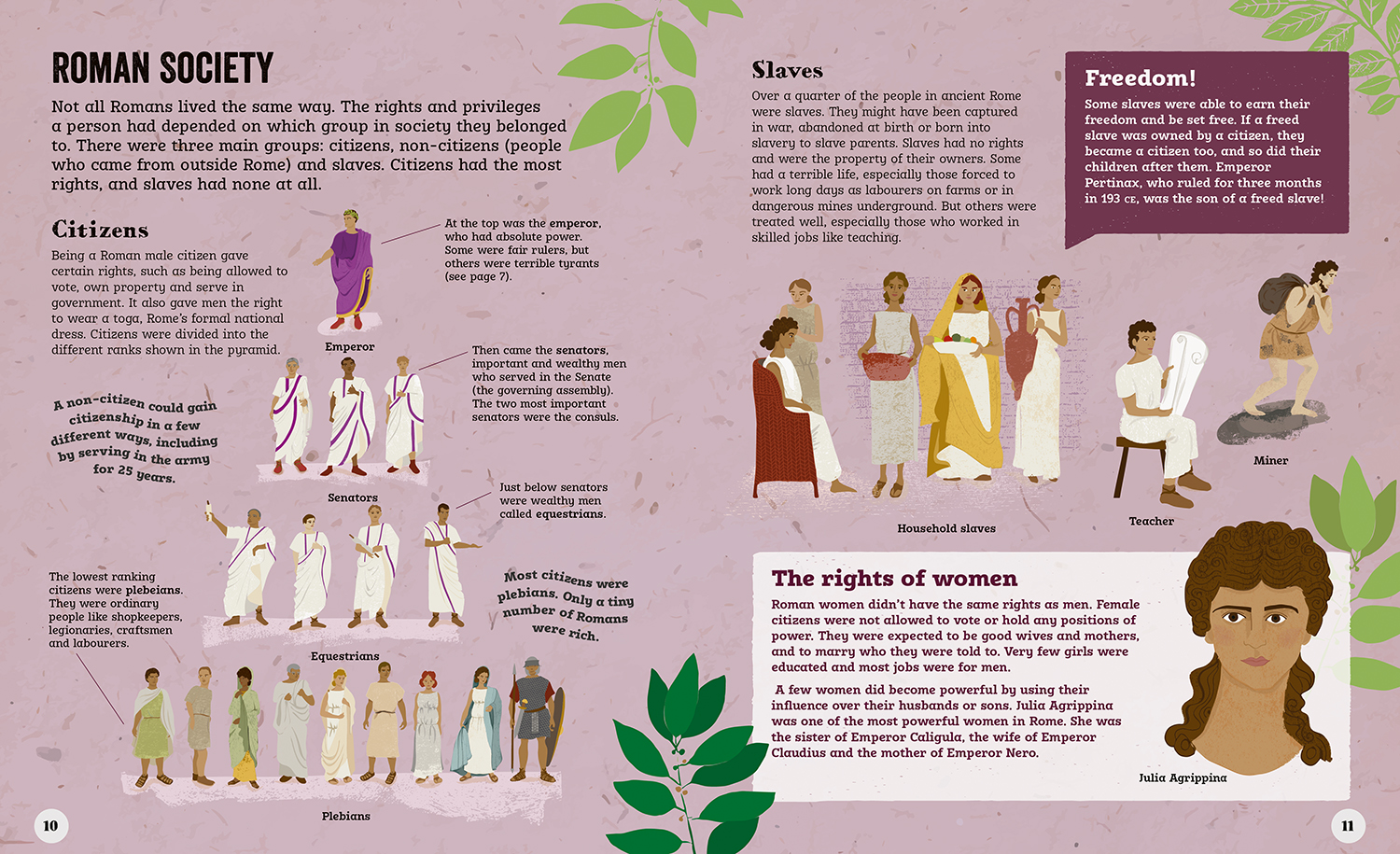
There are certain topics that appear in all of the books across the series – things like a timeline, food, health and medicine, what people wore, how society was structured, what a typical house looked like, what people did for fun, and so on.
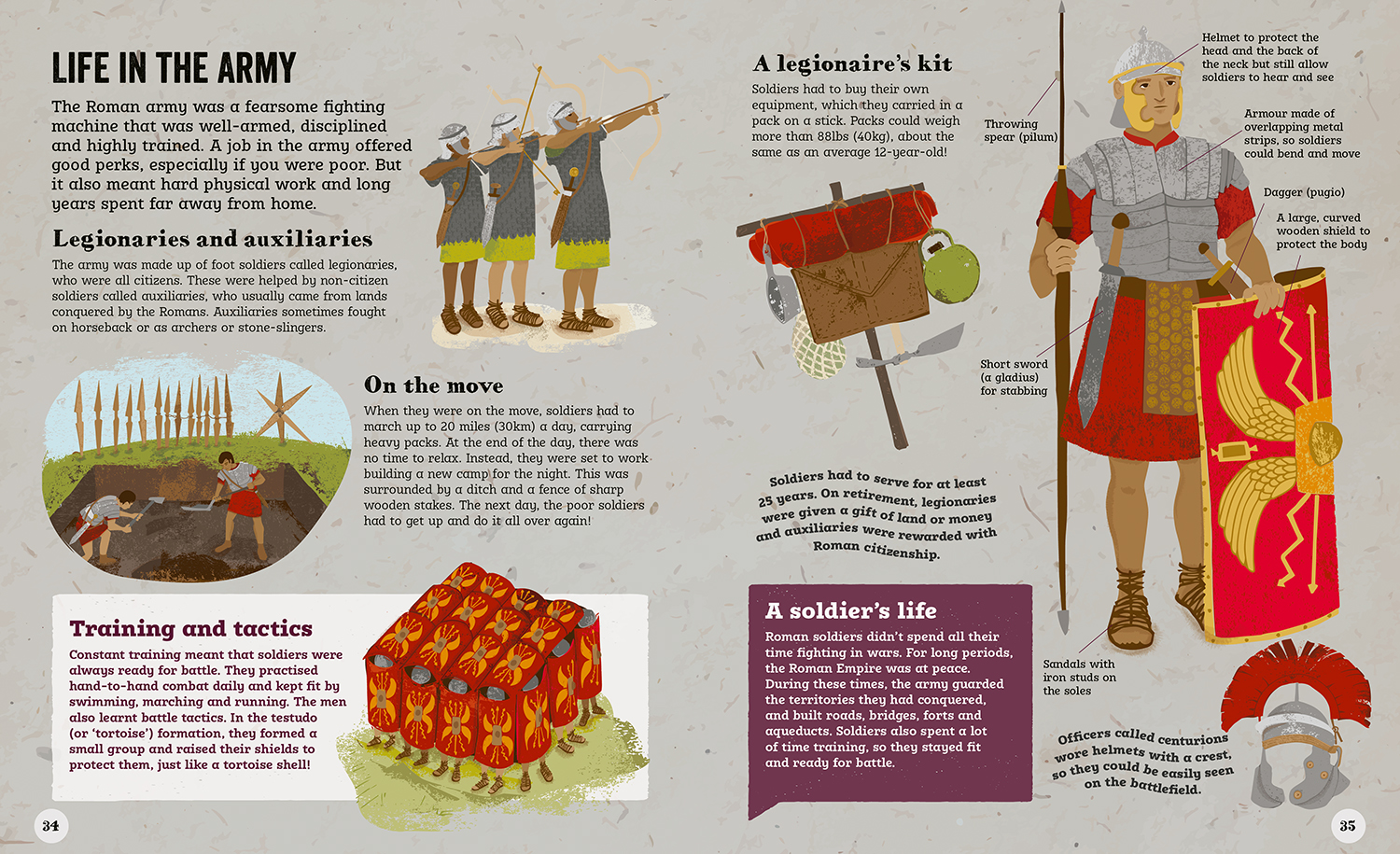
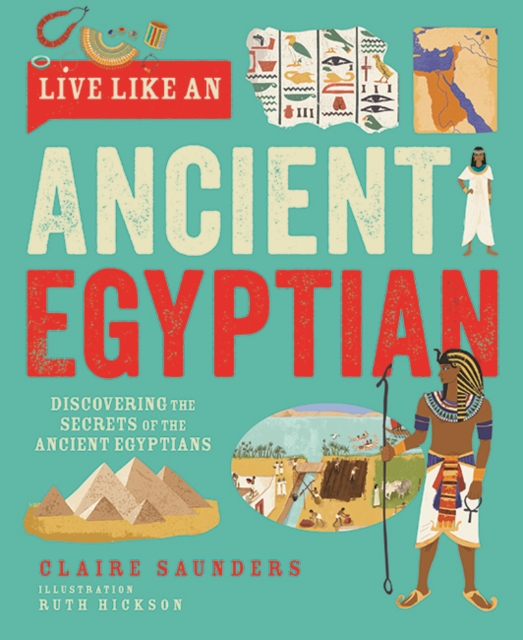
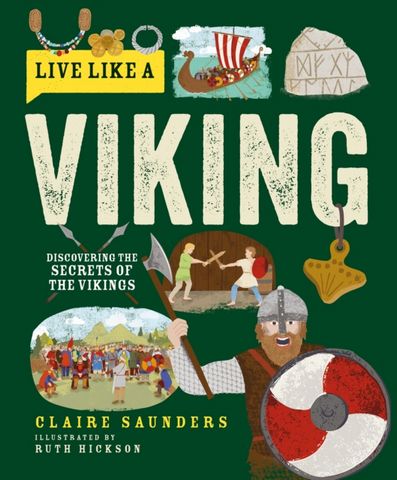
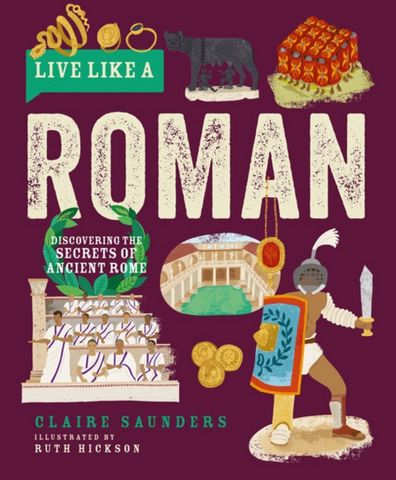
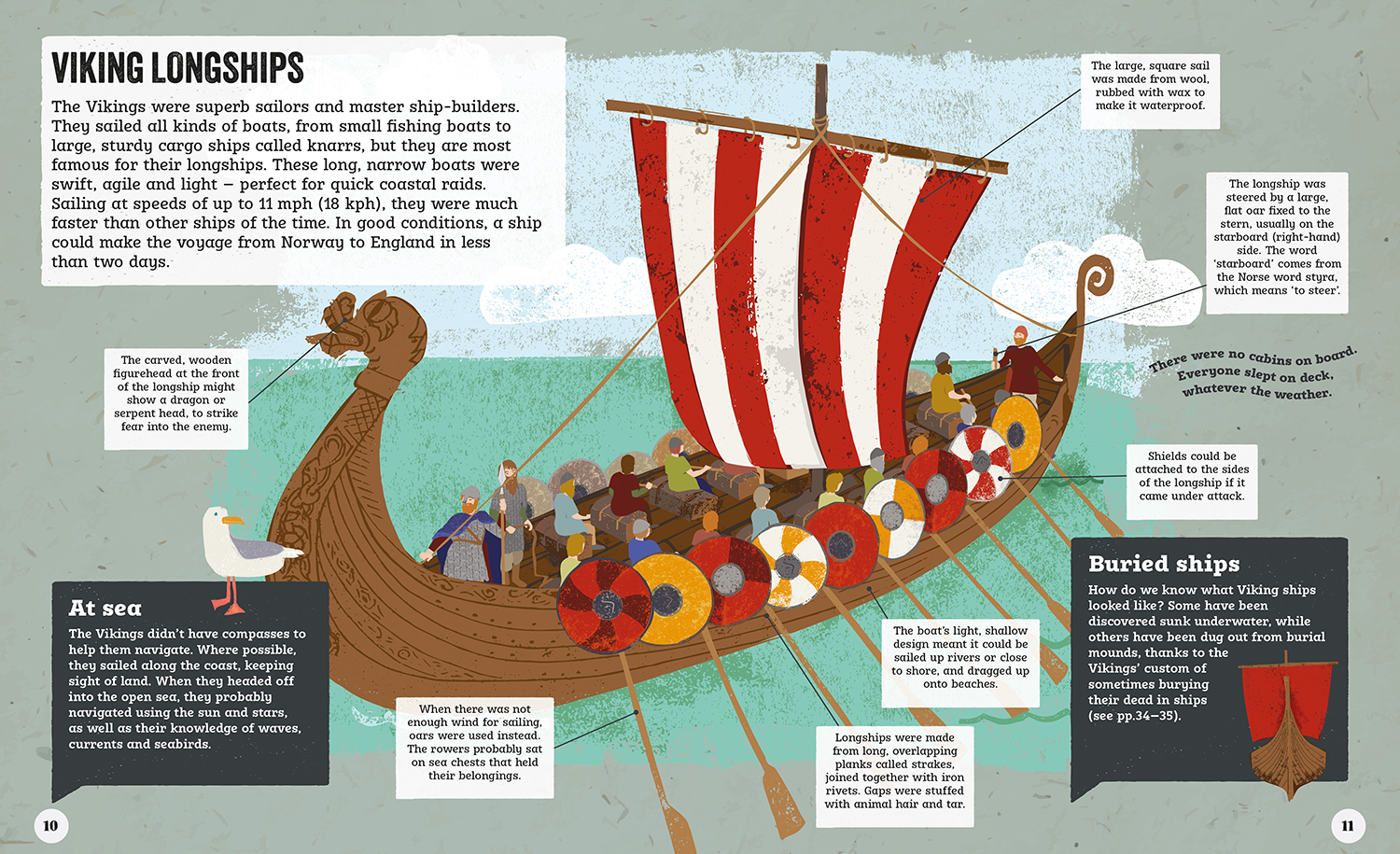
But each book also covers some topics that are unique or especially important to that period of history – for example, in the Romans book we have a spread on life in the Roman army, in Vikings there are spreads on the afterlife and on the iconic Viking longship, and in Ancient Egyptians we have spreads on all the things you instantly think of when you hear the words ‘Ancient Egypt’ – hieroglyphics, pyramids and mummies!
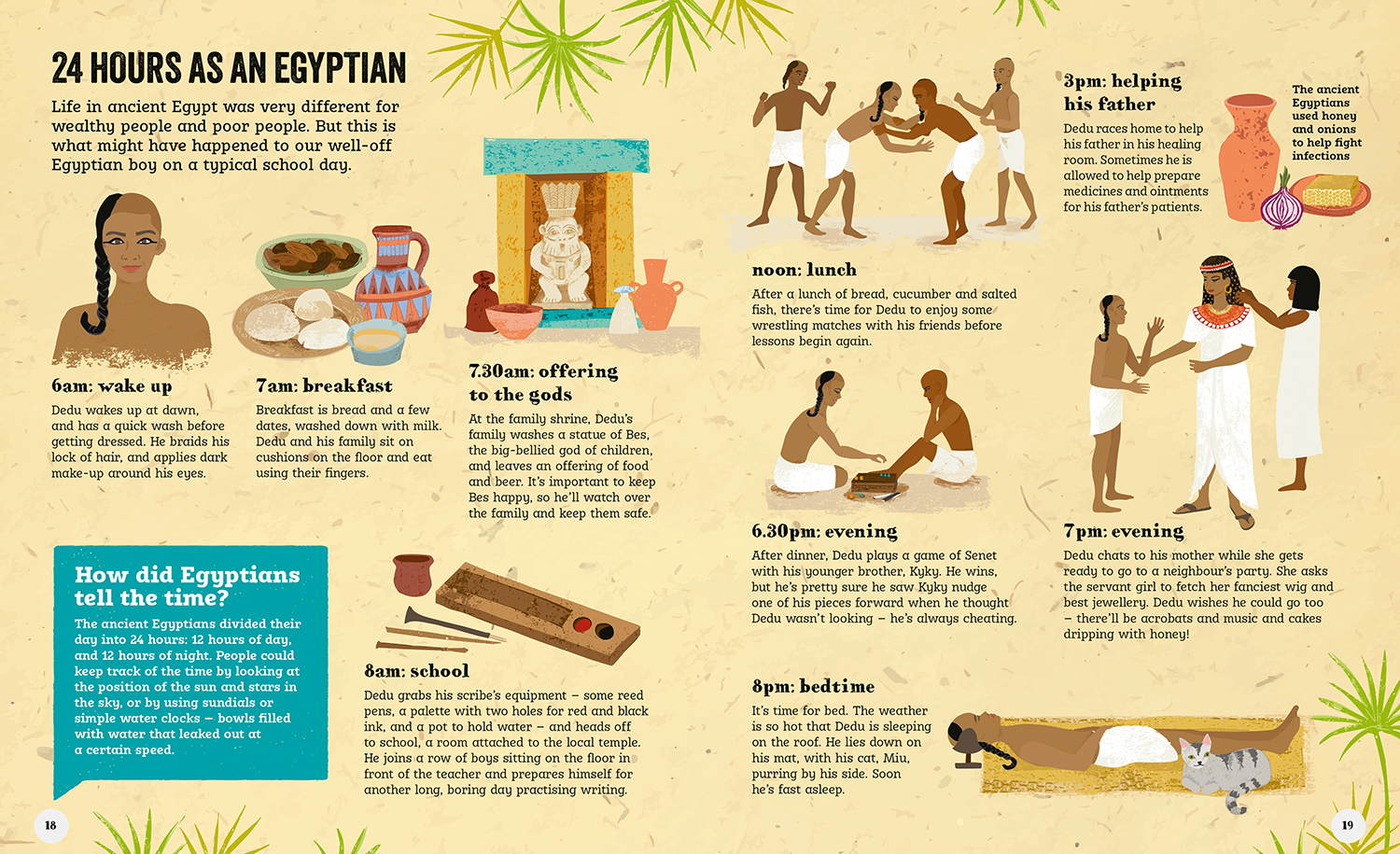
Each book also includes at least three craft activities and three stories. When I’m planning a book, I try to choose a few crafts that kids can actually use and enjoy after they’ve finished making them (things like games, a Roman wax tablet or – my favourite – a usable Viking drinking horn!). When it comes to the stories, I think about places or experiences that kids might find interesting or that lend themselves to lots of action and excitement – for example, the Ancient Egyptians book follows our young Egyptian boy to school (something most kids can relate to), and the Romans book immerses readers in the sights and sounds of an action-packed day at the chariot races (the Roman equivalent of a big league football match today).
The final spread of each of the books asks kids “Could you live like a….?” through lots of questions that will hopefully spark fun conversations.