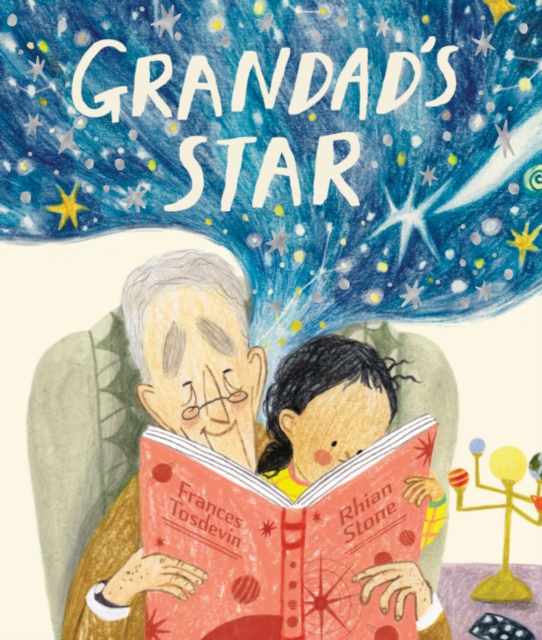
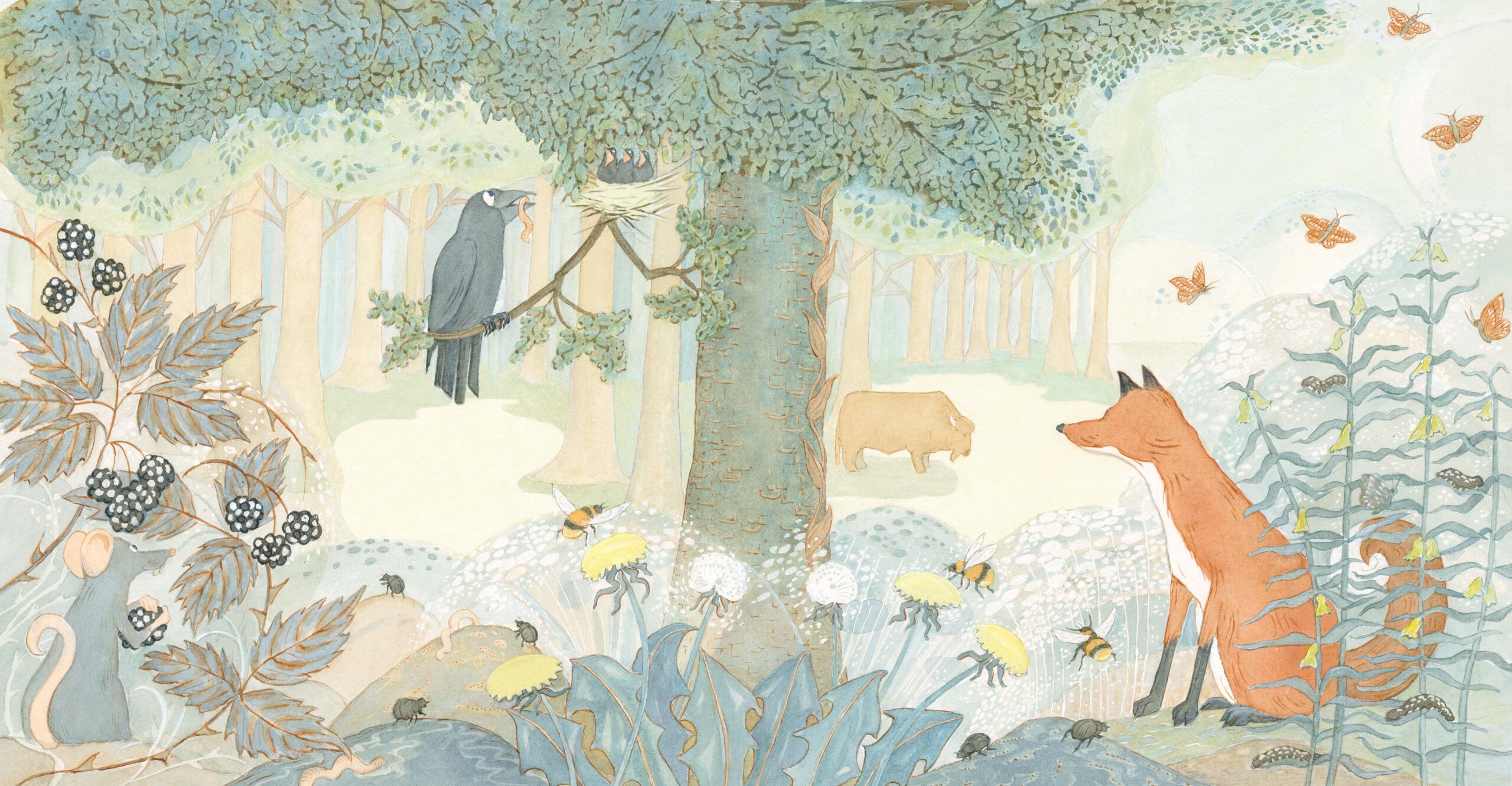
On a cold December morning I was sitting at my desk with one of the most moving picture book texts I’d ever read, racking my brains for the right illustrator. Then an agent I love sent me their newest signing: Rhian Stone. She had a few different pieces, including this cover.
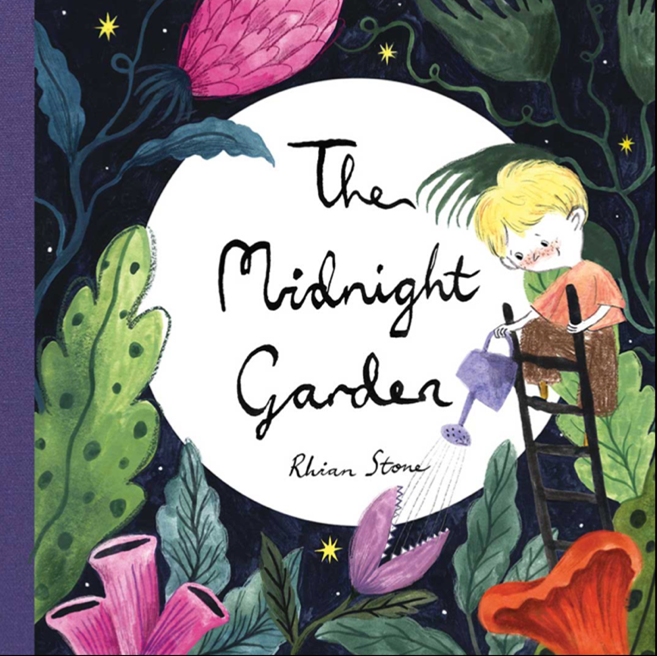 The cover was not for a real story, but an exercise to show what Rhian could do. Grandad’s Star revolves around star gazing, so the sky here attracted me. But it also needed someone who could draw emotive characters. I was immediately pulled into the world Rhian had created and contacted the agent.
I then found myself in an unusual situation. Rhian was self-taught and had never done a book project before. She was understandably worried that jumping straight into a full-scale picture book might be too much. So, we met online to talk it through. I had wanted to meet her anyway, but now I needed to make sure she saw what I did: the potential of her work.
Rhian is a deep-thinker, and her main concern was not letting me down. Luckily, picture books are a group effort and as I talked to her about the process of working with me and my designer, Ness Wood, she visibly relaxed. (By the way, designer is an inadequate term for the kind of teaching/nudging/encouraging/rearranging/curating magic that actually happens. I need to think of a better job description.)
We always start with thumbnails – or at least that’s what I call them so that illustrators don’t feel they need to do some gorgeous ‘rough’. Roughs can come later, or not at all.
We want the ideas to flow as spontaneously as possible.
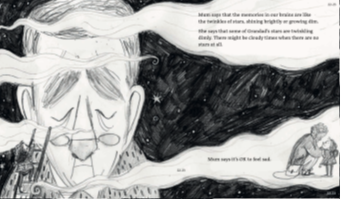
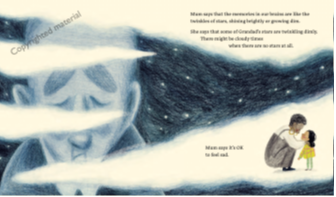
I can’t pretend to remember all that Ness and Rhian worked on around character development and improving the layouts, but two things do stick in my mind: the way that Rhian’s work evolved in amazing leaps during the creative process, and how the biggest improvements I could make as an editor was getting out of her way. I’ll use two spreads to explain:

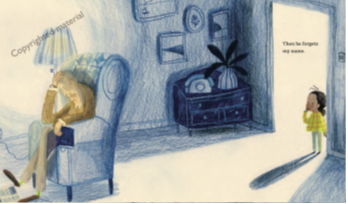
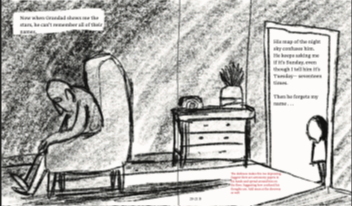 responded to the huge gulf that would be created between them, how, yes, the little girl would be upset but Grandad would be heartbroken too. I knew as soon as I saw this thumbnail that none of the other things that started to tip us off to his memory problems should be on this page. All those things needed to come before this image. Because this spread was only about one thing, the worst thing: him forgetting her name.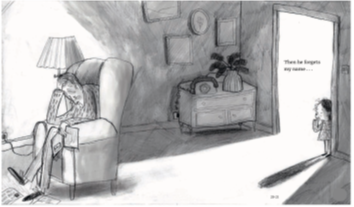
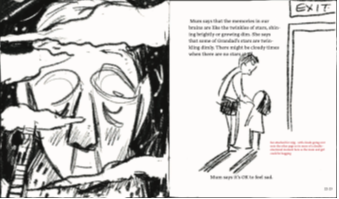 that there is a lot of text to fit (blame the editor!). As soon as I saw this thumb I knew we needed to lose the ‘real world’ and give the left-hand image a lot more space.