Families come in all shapes and sizes. You may be part of an extended family with grandparents and cousins and aunties and uncles, or part of a single parent family… you may have half-siblings or same sex parents – there are many ways families exist.
As a care-experienced author, I often feature various types of care-experienced young people, and their circumstances, in the books I write.
Kinship care is if you have other family members, or close friends, who take responsibility if you’re unable to live with your birth parents.
Foster care is a short- or long-term arrangement that is temporary. You might go on to be adopted or return to live with your birth family.
Residential care is when the local authority (or sometimes a charity or religious organisation – such as Home for Good or Compassion UK) provide a placement.
There were approximately 83,630 looked after children in the UK in 2024 and I think it’s important that different types of care-experience are explored and represented in the stories we tell.
Fiction can offer comfort, as well as entertain, but it also should be a mix of ‘mirrors and windows’. Mirrors are when a reader is able to recognise themselves and their life experiences in what they read, with situations and points of view that they may recognise. When you see yourself, your family and your life experiences represented, it helps to build a positive self-image. You understand that you’re worthy, and by being included, there is a sense of belonging.
With windows – if you show a reader life experiences and family set ups that they may be unfamiliar with, this helps teach empathy and understanding. By showing experiences that children may not have much knowledge or experience of – homelessness, poverty, disability, being a refugee — there are opportunities created for discussions and questions to be asked (particularly useful as class reads supported by teaching resources). For some, reading about care-experienced characters might be their first introduction to the UK care system.
The most well-known care-experienced character in contemporary realistic fiction is Tracy Beaker by Jacqueline Wilson. A much-loved character but this book was published thirty-four years ago! The TV series based off Tracy Beaker– The Dumping Ground – set in a residential group home is still going strong which is great, however, I still believe there could be more stories reflecting the diversity of care-experienced children.
I grew up in two types of care setting. I lived in large residential group homes and also was fostered with several different families, ranging from three months to three years. Each foster placement was a different experience and I bring all my life experiences into everything that I write.
My day job is in Safeguarding and Wellbeing at an FE college and I’m involved with social services and the police, child protection and child in need meetings frequently. I believe in addressing topics which may be perceived as challenging too. It’s important to engage with these topics sensitively, but factually. Not talking about these issues doesn’t make them go away; it’s important that a child who may be experiencing something difficult knows they aren’t alone. Perhaps reading about a topic may prompt a discussion with a teacher or trusted adult? Children need to be able to talk about, and read about, topics that adults may find problematic.
I deeply believe in the transformative power of stories too. From my own experience as a reader, I read to understand myself and my place in the world. As a child experiencing unpleasant home circumstances, although I enjoyed The Lion, the Witch and the Wardrobe, it was books like Anne of Green Gables that really ignited my love of literature. I needed hope; I wanted to know that people (characters) had experienced death, illness, abuse, loss and that they’d survived, or even thrived. I needed to be reassured that there were other possibilities for how my life could turn out.
Stories, at their best, can provide children with an opportunity to work through big – and often scary – emotions: anger, fear, sadness, shame. Through the characters, books can offer space where the reader experiences those same emotions, but at a safe distance. They encourage empathy; a reader can consider why a character makes certain decisions, what that leads to and how they’d respond if they found themselves in the same situation.
~
Many thanks to EL Norry for her insight and generosity in sharing.
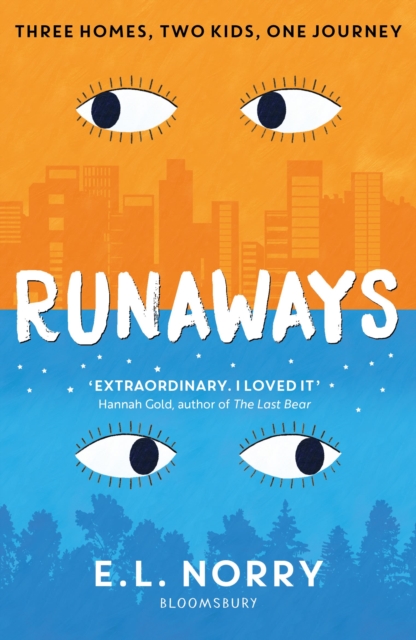
You can find out more about Runaways below and also see EL’s other fiction, non-fiction and anthologies suitable for schools.