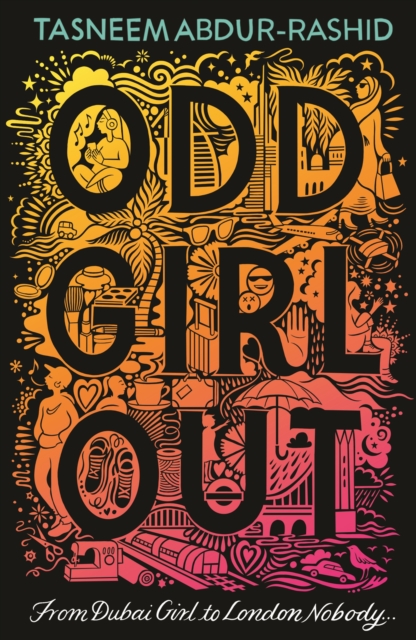
And that’s why I wrote Odd Girl Out – the sort of book I wish was available when I was growing up. Odd Girl Out is about fifteen-year-old Maaryah who is forced to leave her dad, friends, home and life in Dubai behind when her parents split up under mysterious circumstances. At its core, my debut Young Adult novel is about family, faith and fitting in. It’s about finding your feet in a brand-new country and life, the importance of staying true to yourself, and the power of friendship when finding your people. It explores everyday teenage struggles like complicated families, friendship group dramas and romance, but it also looks at deeper societal issues as well, like race, class structures, Islamophobia and bullying.
For young adult Muslim readers, authentic representation can be life-changing. It gives them permission to take up space and be proud of who they are. It tells them that they are not alone, that others have walked similar paths and have come out stronger. And for non-Muslim readers, these stories open doors to empathy and connection, breaking down the barriers that ignorance builds, because books have the power to foster understanding and empathy. I hope Odd Girl Out helps readers see beyond media stereotypes and political narratives, so that they can recognise and appreciate the shared humanity in all of us.
And ‘authentic’ is the key word here. Until recently, mainstream film, TV and books have missed stories that authentically represented Muslims, especially Muslim young people. When Muslims did appear on screens or pages, they were often portrayed through a narrow lens – either as oppressed or as villains, which reinforced damaging stereotypes. In reality, Muslim teenagers are as complex, vibrant, and diverse as any other group. They deserve to see themselves in books – and not just as background characters, but as protagonists whose stories are filled with joy, love, struggles, and triumphs.
The landscape seems to be slowly shifting though, as more Muslim creatives have started to claim spaces to tell our stories. But representation is more than just a trend – it’s a necessity – and there is still a lot of work to be done in ensuring that all communities feel seek in the books that they read. We owe it to young people to give them stories that reflect the world they live in, in all its diversity.