Do you have a particular place or time you enjoy composing poetry?
Places where there are no distractions are very useful, for example I like to get my notebook out and write if I’m on a train journey, I also love attending writing workshops either online or in person. I find creating a time limit his helpful so I can’t waste time overthinking! Sometimes my friends and I will set each other writing challenges and send them to each other, last year we wrote a poem a day for a month and then all gave feedback to each other, I think having people to share the work with really helps to motivate me.
Can you remember poetry at school? Did it help or hinder your love of poetry?
I loved poetry at school! Particularly in secondary school and working my way through the fabled anthology of poems. I loved discussing them and having those exciting moments of trying to solve the puzzle of a poem – what was happening, why the poet used certain techniques etc… In Primary School I became very familiar with a short poem called ‘Snowball’ as one of my teachers used to make us copy out poems for handwriting practice, I always tried to get that one as it was the shortest! I remember learning about acrostic poems and feeling inspired to write one at home, which I then had published in a local magazine.
What’s a poem you love that you think really showcases how much emotion (of any kind) poetry can demonstrate – it can be one you your own!!!
Ooh there’s so many to choose from and my ‘favourite poem’ changes quite frequently. I was thrilled to watch the New Year’s fireworks on TV and to hear a spoken word poem accompanying them (This Is What England Means To Me by Sonny Green). It was such a poignant message about unity, love and celebrating diversity, and being set alongside the beautiful colours and sparkles of the fireworks really added to the theme of positivity presented in the poem.
What’s the biggest misconception about poetry?
Poetry is all about having ideas and then choosing how to present them. It is definitely not about having good handwriting or being able to spell everything correctly (thank goodness!). I meet so many people who think they ‘can’t write poetry’ or ‘aren’t good enough’ and confidence around handwriting and spelling seem to feed into that significantly. I always do my best to make it clear that a poet’s priority is creativity and I often find in sessions that people surprise themselves once these barriers and misconceptions are removed. That’s one reason why it’s such a great tool for increasing people’s confidence in their ability and in their own voice.
Why do you love it?
Because so much can be said or shown in a very concise space. Poetry allows us to experience a moment or a scene in an intense and intimate way for a short time but it also leaves you the space to reflect on what you’ve read or heard. It can be accessed in so many ways – by reading it, listening to it or watching it live or online, viewing it on display somewhere unexpected… I have also been fortunate that poetry has brought me so many amazing opportunities and that my poems have travelled to surprising places too.
Poetry is much more enjoyable and satisfying than many children think, what would you say to kids not sure if poetry is for them?
I would urge them not to write off a whole type of creativity. People tend not to say ‘I don’t like films’ or ‘I don’t like music’ but within those genres they will have preferences, for example some people may love rap music but detest ballads. Poetry is the same, there’s so much of it you just need to find the kinds you like.
And what would you suggest to teachers who are hesitant to teach it, how might they introduce or attempt a series of fun poetry lessons?
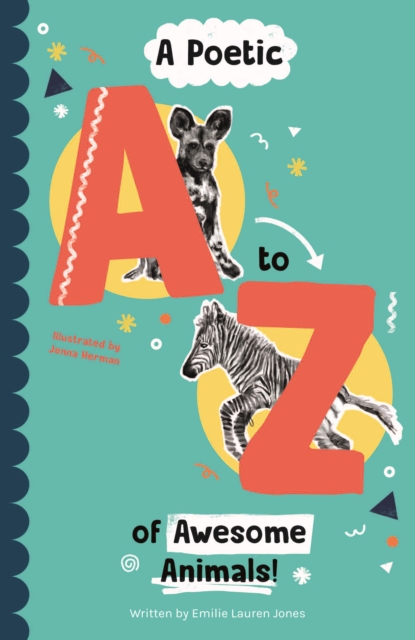
Following on from the previous point, poetry is such a vast area and there are so many poems/types of poems you can explore in an engaging way. In my book ‘A Poetic A to Z of Awesome Animals’ (Caboodle Books, 2023), I included a section at the back with several writing activities inspired by poems in the book. One of my hopes was that this would help encourage readers to have a go at creating their own poems. I’ve had a few people get in touch to say they’ve used the activities in the book as teaching resources, for instance, one school said they had used ‘Mosquito’ as a unique way of linking literacy and science when studying life cycles.
What is the potential of poetry?
Throughout history, poetry has been used as a tool to educate, inform and entertain. Poetry offers readers a view into somebody else’s world, allowing us to experience ideas and voices that are different to our own. Sharing stories through poetry encourages compassion; analysing poems helps to develop critical thinking skills. Poetry is so much bigger than just being a type of writing that needs to be covered in schools, it has an important place in the real world and offering young people the opportunity to foster a love of poetry is vital.
~
Many thanks to Emilie for answering our questions. You can read more about her poetry collection using the link below or find out details about Emilie coming to your school by visiting her site here.