
Do you have a particular place or time you enjoy composing poetry?
My best ideas tend to arrive when I’m out on a walk. I use the voice notes app on my phone and ‘write’ the poem out loud as I go. I often wonder if the dog walkers think I’m on an extremely animated phone call… entirely in rhyme!
Can you remember poetry at school? Did it help or hinder your love of poetry?
If I’m honest, I wasn’t a huge fan at school. But I’ve always loved playing with words; writing lyrics, exaggerating everyday moments into dramatic anecdotes, finding the funny side of things. I know now that all those are poetry too.
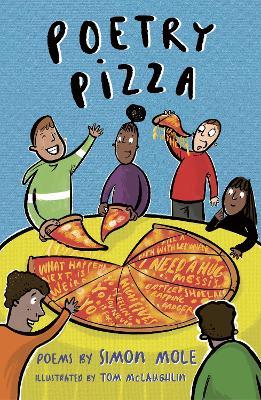
In Poetry Pizza, my latest collection for 7–11 year olds, I’ve included a wide range of forms and styles. I love the idea of a child opening the book, finding a poem made entirely from things “BRB” could stand for, having a chuckle and thinking, “This is poetry?!” … And then having a go at their own version!
What’s a poem you love that really showcases how much emotion poetry can demonstrate?
My own children are big football fans, and one of my favourite poems in Poetry Pizza is called The Beautiful Game. I wanted to capture that surge of energy and passion that everyone who plays sport will recognise. In the same way that a football match is often described as ‘an emotional rollercoaster’, poetry can hold excitement, frustration, hope and pride – sometimes all in a single stanza.
What’s the biggest misconception about poetry?
It’s the classic one: that it has to rhyme.
I love rhyming poetry. But rhyme is just one tool in the box. In workshops, I often see young writers get stuck because they can’t find the “perfect” rhyme, or perhaps they force one in that doesn’t quite make sense. Most of my writing games and activities focus on the content first and foremost – if children are supported to write about something they are genuinely interested in, I find there’s less struggle getting ideas down on the page (whether those ideas are rhyming or not).
Why do you love it?
Poetry helps me pay attention.
It makes me slow down and notice details I might otherwise rush past. In a world that moves quickly, especially with the amount of time we all spend online, poetry gives us permission to pause. To look closely. To listen properly.
After years of working with young people, I’ve seen how powerful that slowing down can be; not just creatively, but emotionally too.
Poetry is more enjoyable and satisfying than many children think. What would you say to kids who aren’t sure it’s for them?
Nobody loves every film they watch or every song they hear — and poetry’s no different.
If you don’t enjoy one poem, that doesn’t mean poetry isn’t for you. It just means you haven’t found your kind yet. Ask a teacher, librarian or friend for a recommendation based on what your interests are. Whether you want a short, funny poem about someone solving a Rubik’s Cube with their toes, or something uplifting that reminds you it’s brilliant to be yourself — the poem for you is out there!
(And, purely by coincidence, both of those particular poems can be found inside Poetry Pizza.)
What would you suggest to teachers who feel hesitant about teaching poetry?
Fear not!
After more than 15 years delivering workshops in schools, I completely understand that poetry can feel daunting to teach, especially if it’s not something you particularly enjoy yourself! That’s why I create accessible write-along videos on my YouTube channel. Teachers can pop one on, join in if they’d like, and watch their class build a poem step by step. The focus is always on playfulness, participation and removing the fear factor.
Say yes to your own ideas!
What is the potential of poetry?
Poetry reaches far beyond the page.
For children, it builds confidence with language, and can act as a gateway into wider reading. It can also have a powerful impact on emotional wellbeing. When young people are given the space and support to express themselves through poetry or rap, it’s such a big boost to their confidence. They discover their voice, and once they realise their voice matters, that can have a positive effect in so many ways.
~
Many thanks to Simon for sharing these answers. You can find out more about Simon’s poetry collections below and get details about his workshops or him visiting your school via his website here.