:

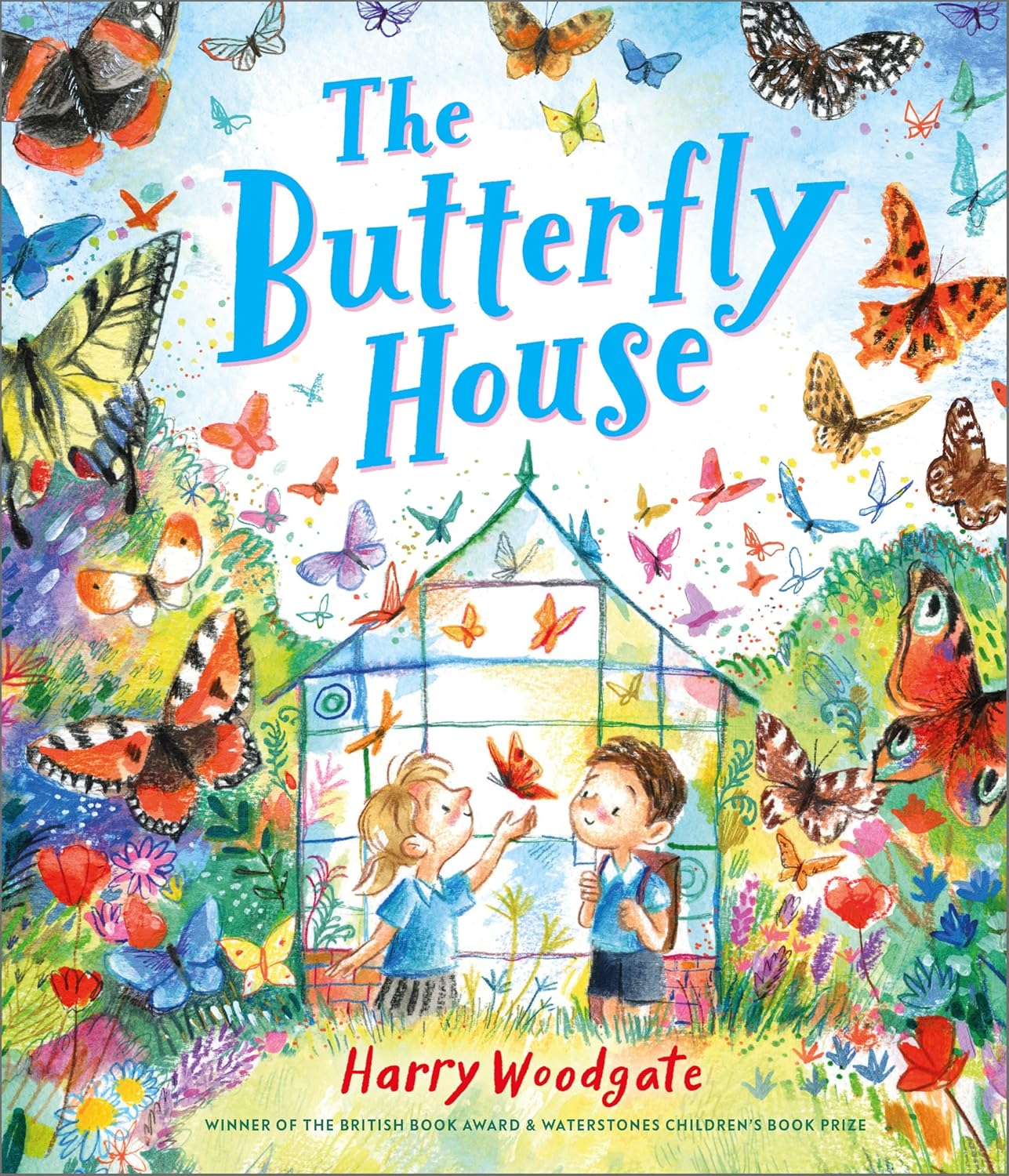
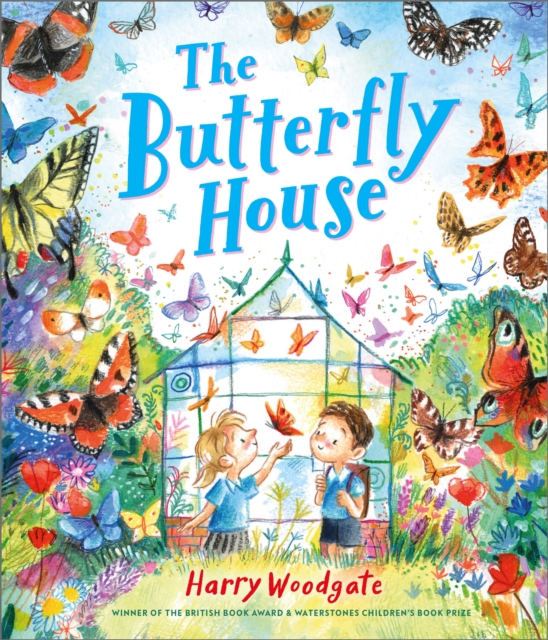
My original intention with The Butterfly House was to create a picture book that explored the connections between nature and mental health, and in particular the impact that gardening can have in terms of improving wellbeing and fostering connection. For young children especially, outdoor learning can help encourage self-regulation, develop fine motor skills and build confidence and autonomy, but the benefits of engaging with nature can be lifelong.
Perhaps appropriately given its subject matter, the story grew quite organically and was remarkably stubborn in its refusal to be rushed, and it took me numerous redrafts and storyboards to successfully untangle its key themes, characters and narratives. The result, however, is a book I hope leaves children and parents feeling optimistic and inspired to enjoy the natural world and get involved in their own communities.
Various inspirations fed into the process of making this book. Miss Brown’s ivy-covered house and wild, overgrown garden are reminiscent of a house I saw numerous times during my childhood, which I found utterly fascinating, if a little on the spooky side. For me, one of the marks of a successful picture book is its ability to capture the wonder that exists within everyday spaces, which we as adults all too often overlook. Young children are fantastically observant and unburdened by familiarity: in their eyes the world is bright and new, and I was keen to weave this sense of magic throughout the story.
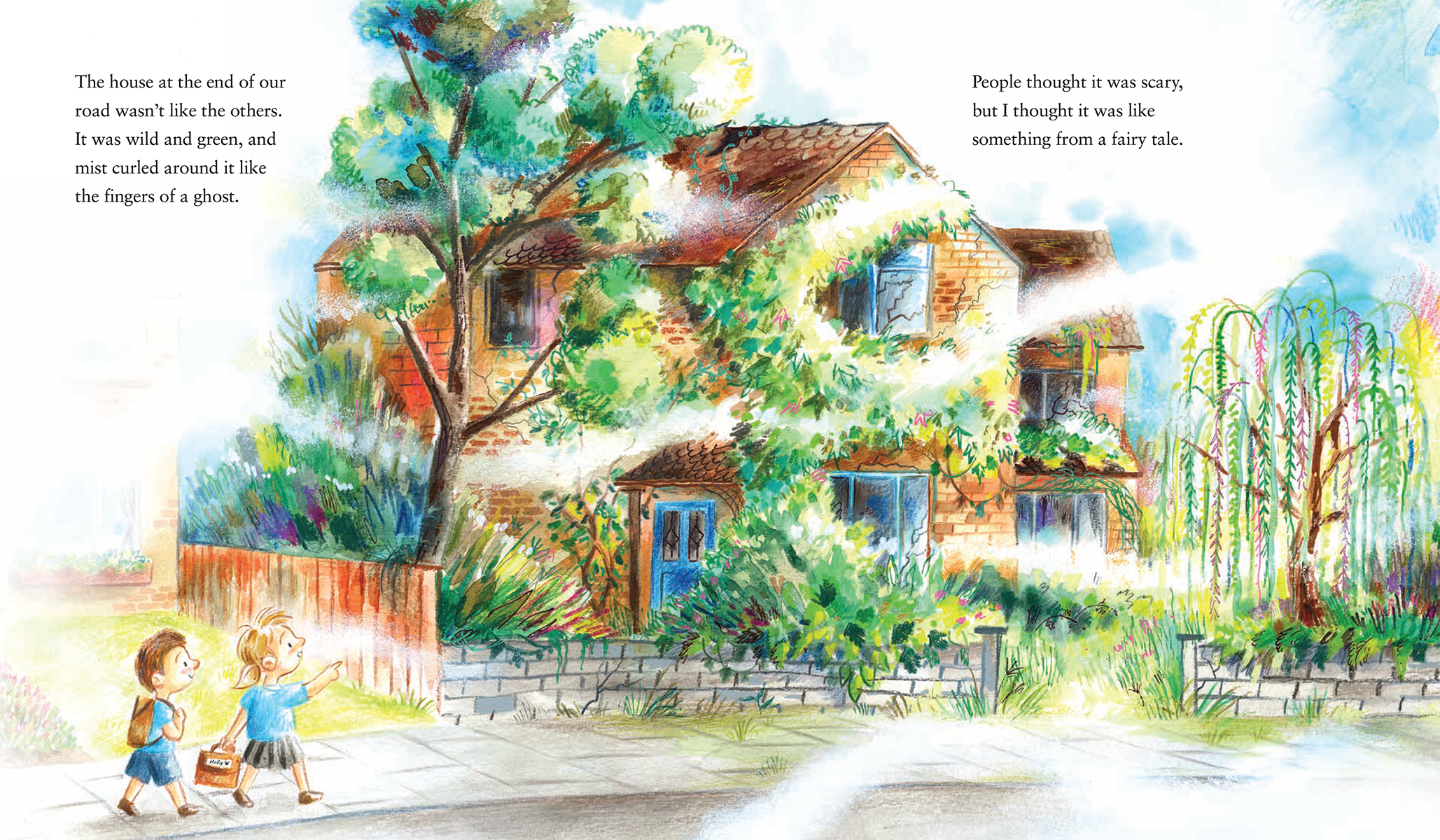
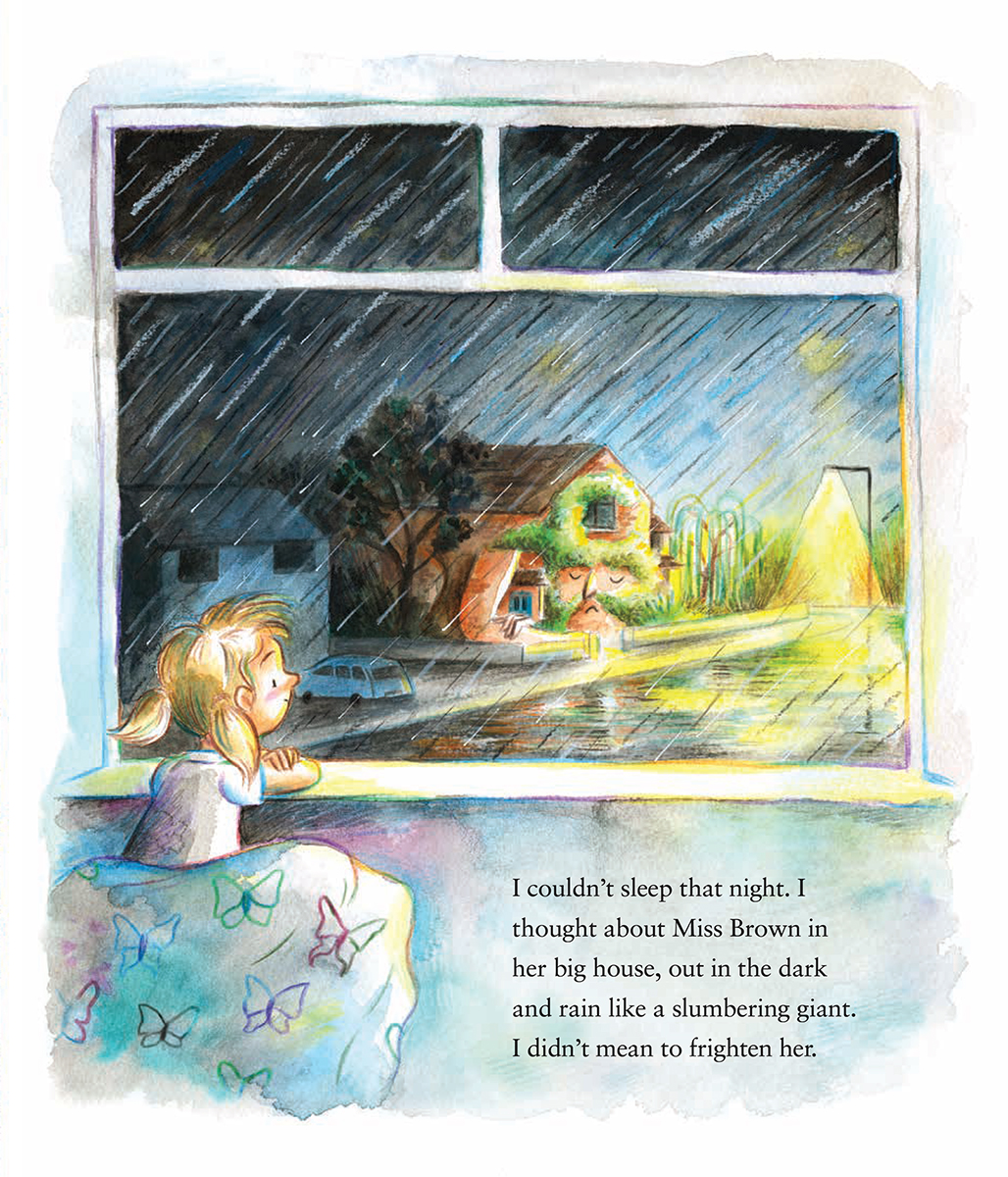
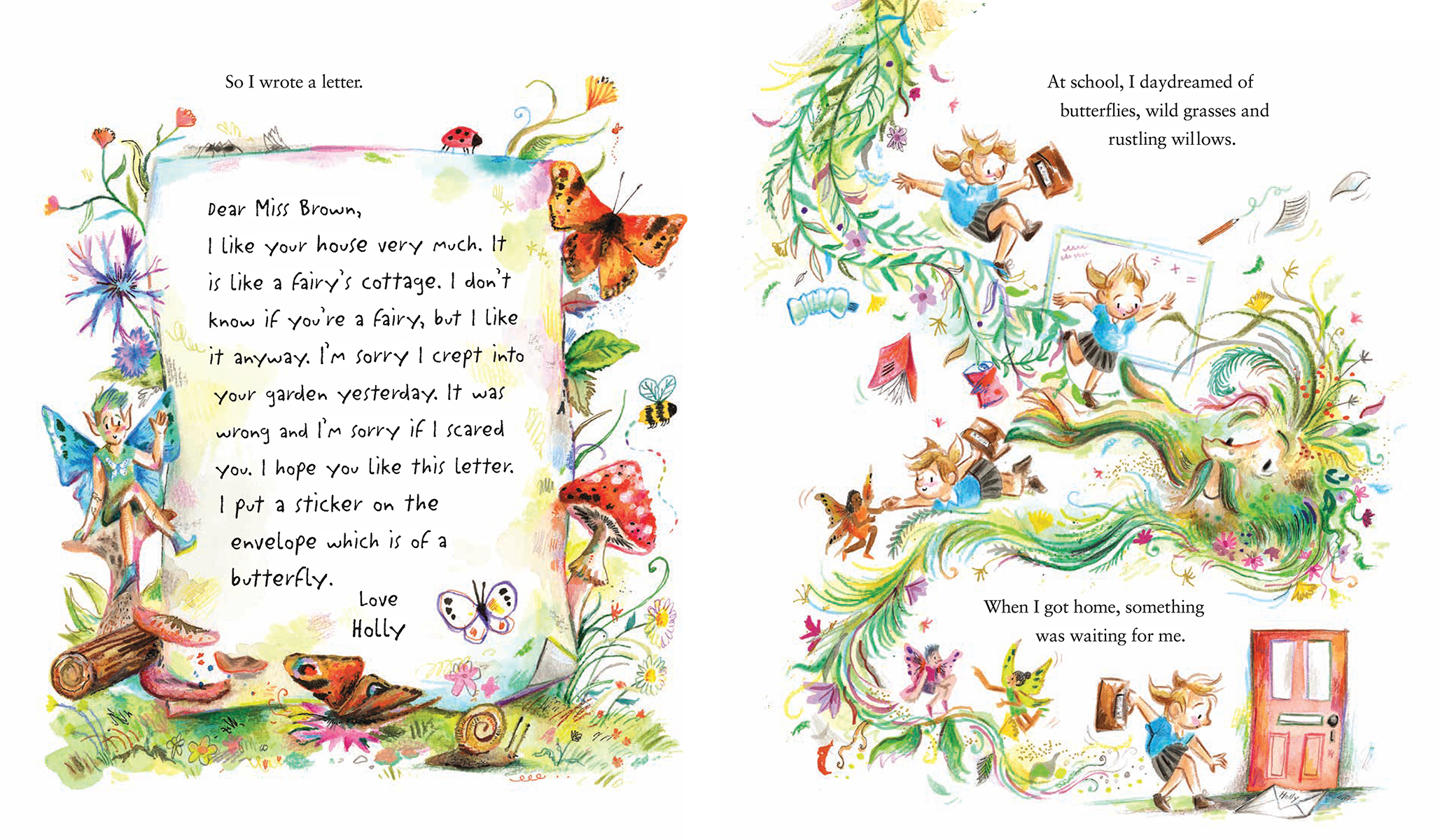
At various points, Holly’s imagination bursts through into the illustrations: Miss Brown’s darkened house appears as a ‘slumbering giant’; Holly cascades through a school day on ‘daydreams of wild grasses and rustling willows’. I hope these whimsical, fantastical elements make the book fun and engaging for young readers, as well as being useful teaching tools for figurative language and visual literacy.
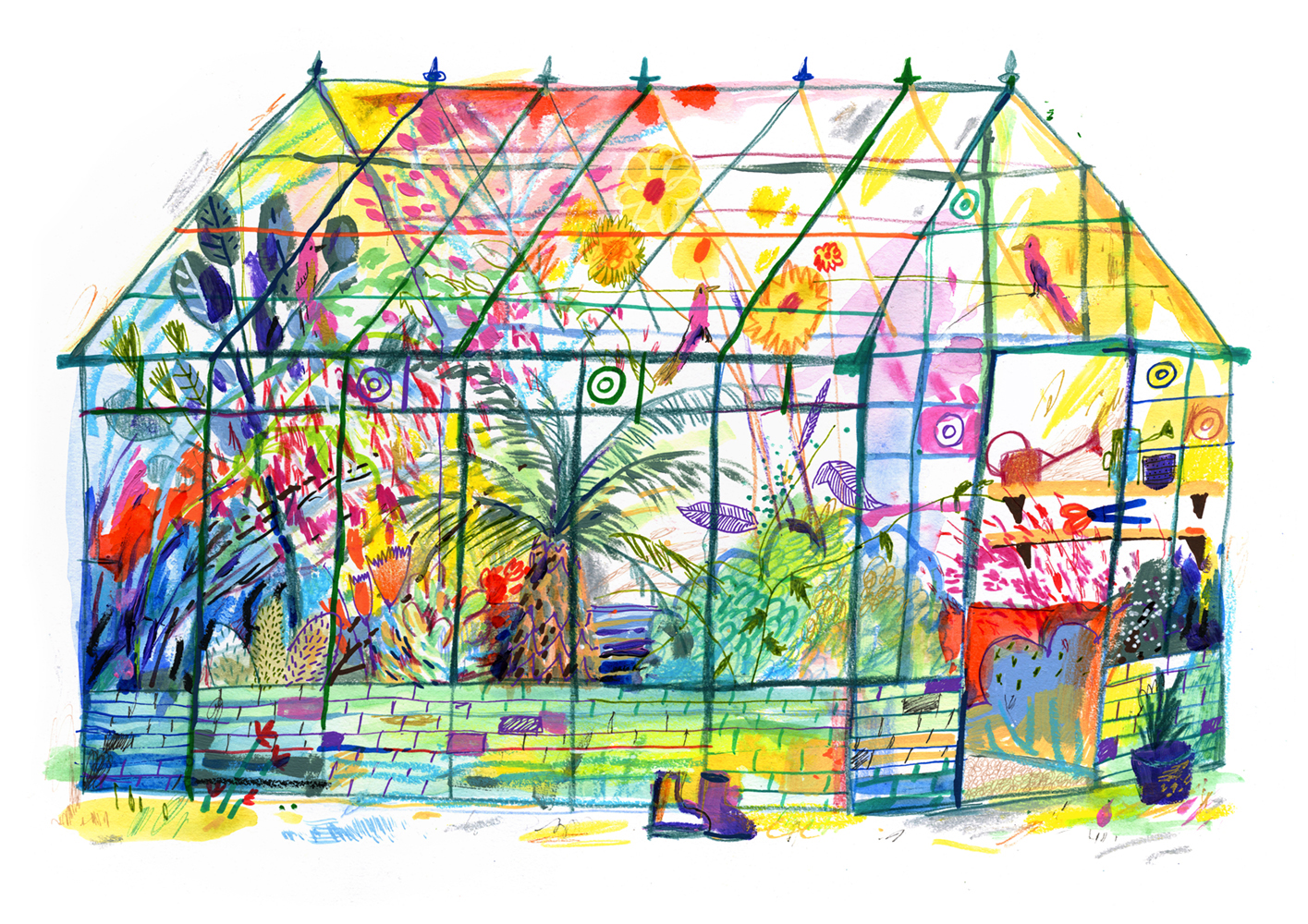
The book’s art direction was largely guided by an illustration I created in 2021 of a lush greenhouse, which was included in a V&A Pocket Studio collection the following year. Before The Butterfly House, I illustrated many of my picture books digitally, but in stepping away from the screen I was able to reconnect with many of the aspects of drawing that I love most: tactility, gesture, instinctive mark-making. Playing with colour and texture, breaking things down into their constituent parts, looking at the world with empathy and curiosity – all of this felt entirely harmonious with the story’s themes of growth and regeneration, and hopefully the joy and satisfaction I derived from illustrating the book carries through to the experience of reading it.
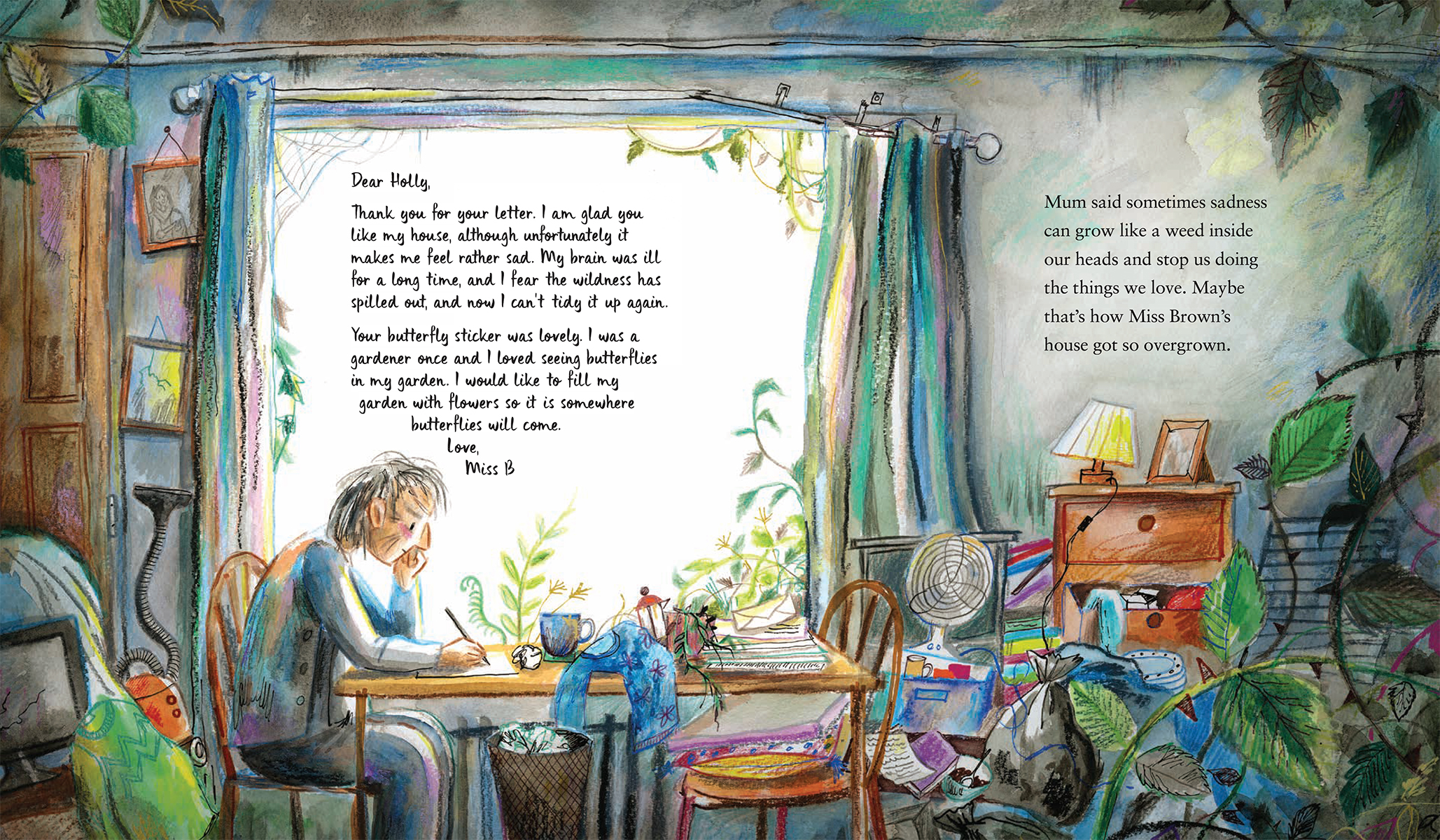
Mental health is a central theme of The Butterfly House, and I was mindful of presenting this in a way that was accessible and not overly intimidating or upsetting for young children. Rather than offering a magical solution, I wanted to show that there are ways we can all support one another through difficult times, and that recovery is a continuous, evolving process rather than a fixed outcome.
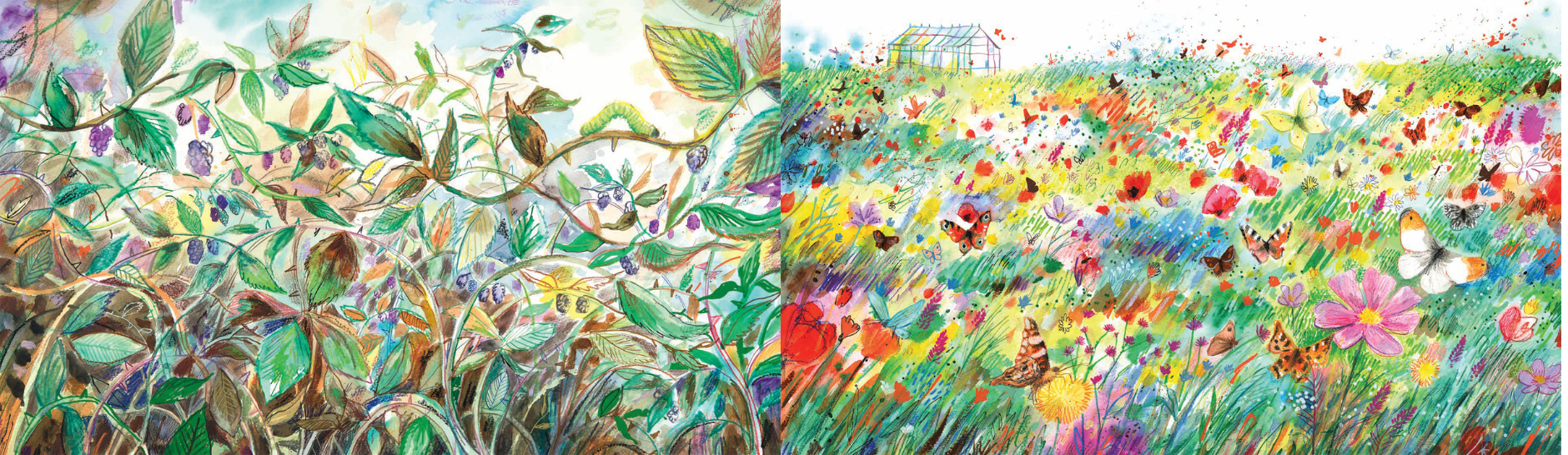
The metaphor of a tangled, unkempt garden seemed like the perfect mirror for Miss Brown’s gradual recovery, and this transformation becomes particularly apparent in the endpapers, where we move from thorny, knotted brambles to a verdant wildflower meadow alive with butterflies. As an illustrator, I’ve long been fascinated by the use of endpapers as peritextual devices – the sense of a story spilling out beyond the confines of its pages and remaining with the reader long after the book has been closed – and this felt like a beautiful way of summarising and framing the book’s narrative for young readers to understand.
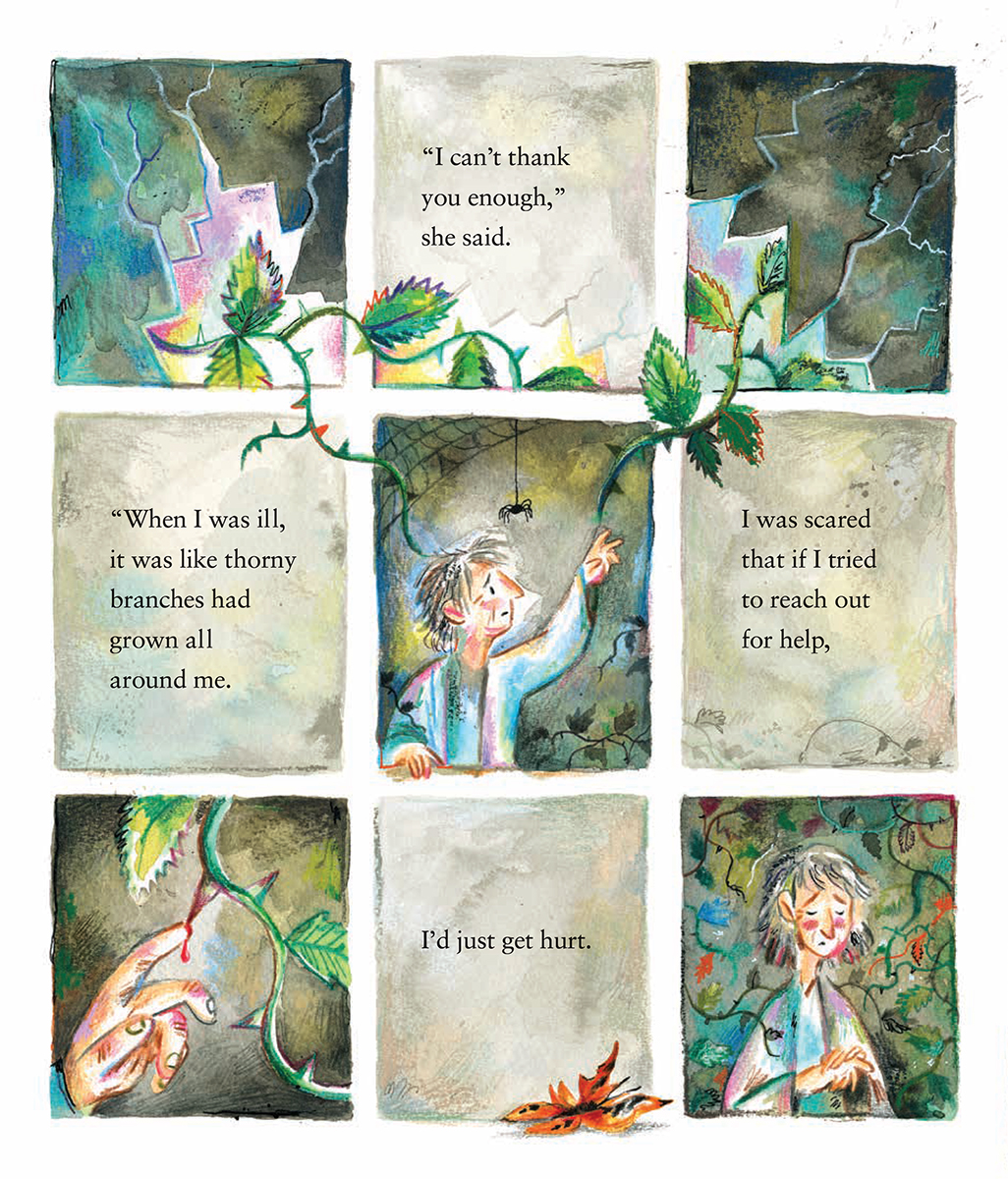
In a different way, the grid of panels on spread eleven helps communicate how Miss Brown feels trapped and separate from the world, while also echoing the shattered glass panes of a greenhouse. I’d love for these visual devices in the book to offer useful starting points for discussions with children about emotions and wellbeing.
The final element I want to touch on is Holly and Miss Brown’s use of letters to converse with one another, because much like gardening, letter-writing necessitates patience, empathy, reflection and intentionality. These are values that underpin The Butterfly House, and at a time where important conversations are being had around children’s screen time and the impacts of social media and AI, I believe it’s vital that we offer young people opportunities to connect directly and authentically with nature and with each other. Most of all, this book is about saying yes to the world, in all its messy, difficult glory, and I hope it encourages kids and families to do that in whatever way resonates with them.
~
Many thanks to Harry for their insight into the beautiful The Butterfly House. You can read more about The Butterfly House using the link below.
Harry Woodgate (they/them) is a multi-award-winning author and illustrator, whose debut picture book Grandad’s Camper won the British Book Awards for Children’s Illustrated Book of the Year and the Waterstones Children’s Book Prize, was shortlisted for the Polari Prize, and named as an ALA Stonewall Honor Book. It was inspired by their university dissertation, which revealed a lack of representation for older LGBTQIA+ characters in children’s books. Their work has also been shortlisted for the V&A Illustration Awards, and the Folio Society Book Illustration Competition twice. When they’re not creating amazing books, they love writing music, cycling, baking, and exploring independent coffee shops and bookstores.
The Butterfly House
Harry Woodgate
ISBN: 9781839132902
From Waterstones Prize-winning Harry Woodgate, this stunning picture book shines a light on mental health, and how kindness, community and gardening can help heal the body and mind. To others, Miss Brown’s wild and overgrown house at the end of the road is scary, but to Holly it’s like something out of a fairy tale. Holly reaches out to Miss Brown and discovers that she isn’t scary at all: her brain has been ill for a while, and the wildness has spilled out. Can their budding friendship, and a bit of help with the butterflies in her garden, encourage Miss Brown to feel like herself again?